What IECEx unit verification certificates cover
The current IECEx operational-document list links OD 033. The linked manual is Edition 1.1, dated March 2020. The list identifies a review due date separately; that date is not a product-certificate expiry date.
OD 033 covers a defined group of items from a single production run. Their serial numbers or other unique identifiers establish the covered units. The route does not extend to later production runs, and the full applicable standard requirements still apply. A complete Ex Test Report supports the assessment.
The official IECEx Equipment Scheme overview distinguishes this from the conventional product-certification route involving factory assessment and ongoing quality surveillance. Unit verification does not require that factory surveillance; it verifies the identified units. This is a different certification basis, not a statement that product safety requirements have been relaxed.
Keep the buying decision specific to the units
A purchasing system often describes equipment by catalogue code and quantity. That can be insufficient for a unit-limited certificate. Add a place for the eventual identifiers and assign responsibility for reconciling them before acceptance.
At quotation stage, those identifiers may not yet be assigned. Record that as an outstanding deliverable, with a responsible party and a review point. Do not fill the gap by treating a previous project's certificate as evidence for the new units.
The following table is an original purchasing aid, not a reproduction of an IECEx form. It separates useful records by the question they answer.
| Purchasing record | Question it should help answer | Mistake to avoid |
|---|---|---|
| Agreed order description | What equipment and options are being purchased? | Assuming a broad family name identifies every configuration |
| Unit identity register | Which physical items are intended for this delivery? | Treating quantity alone as traceability |
| Controlled certificate record | Which identified units does the evidence cover? | Accepting a similar unit from another order |
| Delivery reconciliation | Do the received identifiers match the accepted records? | Signing off before discrepancies are resolved |
| Handover index | Can the operator retrieve the relevant records later? | Leaving the only copy in a buyer's email archive |
Make a unit register usable across teams
Begin with the purchase line, equipment tag and supplier's exact designation. When available, add the physical identifier, certificate reference and location of the supporting record. Keep each field separate rather than combining several numbers in a free-text description.
Distinguish the owner's asset tag from the manufacturer's serial number. An owner may rename a plant item during commissioning without changing the identity used by the certificate. A documented cross-reference helps the operator retain that relationship.
For a delivery split across several shipments, record which units arrived and which remain outstanding. If packaging carries a batch reference, do not assume it is the same identifier that appears on each item. Resolve the mapping in a way the receiving team can actually check.
Use the certificate-verification guide for the wider identity, status and scope review. Unit traceability adds a purchasing control; it does not replace those checks or the project's suitability assessment.
Treat a repeat order as a new evidence question
Consider a hypothetical project that receives three units supported by a unit-verification certificate and later orders another identical-looking unit. Copying the old certificate into the second purchase file does not answer whether the later item is covered.
The buyer should tell the supplier which item is being ordered and request the evidence applicable to that delivery. Keep the new purchase open for technical review until the responsible team can identify the relevant certification basis. This is not a demand for a particular commercial route; it is a refusal to presume coverage from resemblance.
Where the supplier proposes conventional product certification instead, evaluate that proposal on its own evidence. The QAR versus CoC guide explains the different roles of quality and product records. A change in route should be visible in the purchasing file, not hidden behind the same catalogue description.
Resolve discrepancies before acceptance
A mismatched character in an identifier could be a transcription error, a changed item or an incorrect attachment. It requires clarification, not an immediate accusation and not an informal correction by the buyer.
Capture the discrepancy, preserve the documents as received and ask the supplier for a controlled resolution. Refer certification questions to the issuing ExCB through verified contact details. Keep the affected unit separate in the acceptance record so that uncertainty about one item is not silently applied to all the others.
OD 033 does not allow a new issue of an already issued unit-verification CoC. Its change provisions require a new certificate when a product change is not already covered. Therefore, do not promise a routine certificate revision as the solution to a proposed alteration. The manufacturer and issuing body must determine the appropriate action.
Keep market and installation reviews separate
An IECEx unit-verification record should not be described as an ATEX Module G document. They belong to different frameworks. Use the dedicated ATEX Module G guide when that route is relevant, and record destination requirements separately from the IECEx decision.
Likewise, accepting the certificate does not complete installation approval. The responsible engineer still needs the actual site classification, required protection, operating conditions and controlled instructions. A clearly identified unit can still be unsuitable for the proposed location.
Current MMAIATEX certification status
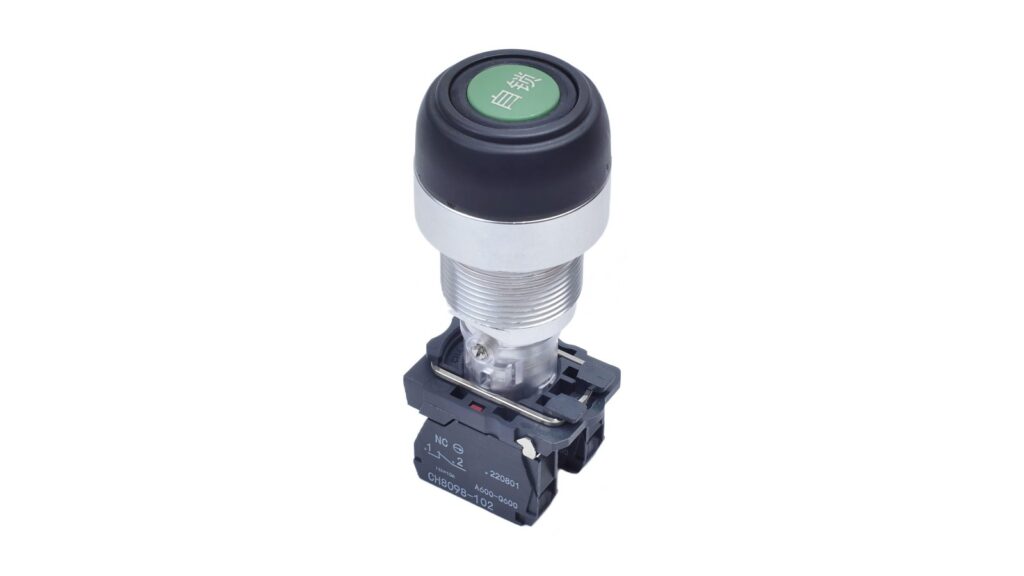
MMAIATEX is the public brand of MMAIATEX Explosion-proof Technology (Zhejiang) Co., Ltd. The public About page states that ATEX, IECEx and CCC certification is in progress. This article does not claim that MMAIATEX holds unit-verification certificates for any pictured or offered equipment. Request and verify exact current documentation before making a purchasing decision.
Safety disclaimer
This article is general procurement guidance, not a certificate, certification-body decision, legal opinion or authorization to install, modify or operate equipment. Use applicable law, current scheme documents, controlled product information and competent professionals. Do not release equipment for use when identity, coverage or suitability remains unresolved.
Contact MMAIATEX about the required evidence
Send the offered designation, destination, intended application, required conformity route and any unit identifiers already assigned. Request available product records for review by your responsible engineering and compliance team.