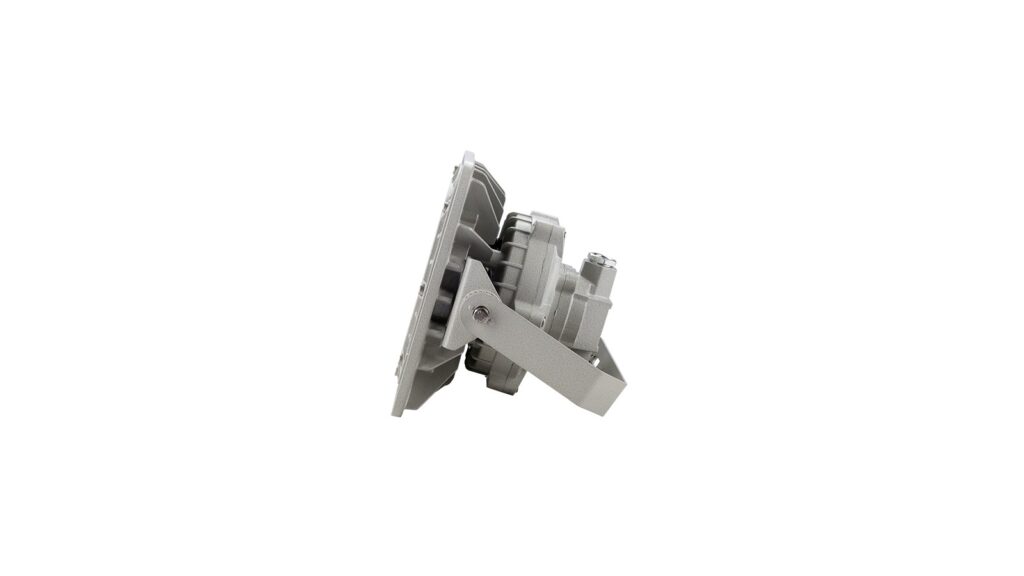
Image note: The representative website product photograph is not a dust-test specimen, pressure-test record or protective-system design. Verify exact model marking, certificate scope and current documentation separately.
Kst vs Pmax: identify the quantity before comparing results
OSHA's Technical Manual chapter on combustible dust, printed page 10, describes Kst as the maximum normalised rate of deflagration pressure rise, expressed in bar m/s. It describes Pmax as the maximum measured deflagration pressure, normally expressed in bar gauge. One concerns the rate-related index; the other concerns pressure reached.
That distinction should remain visible when the laboratory report becomes a purchasing spreadsheet. Copy the quantity name and units together. Do not move an unlabelled number into a generic explosion rating field, and do not compare values until the responsible reviewer has established what each entry represents.
The practical task for purchasing is to preserve the evidence accurately and route the unanswered question. It is not to reconstruct a laboratory calculation or derive a protection specification from the numbers. The workflow below is an editorial aid for that limited task.
Four records that should survive the handover
| Evidence item | What to keep visible | What not to do |
|---|---|---|
| Kst result | Index name, reported value and units | Relabel it as a maximum pressure |
| Pmax result | Pressure result and stated reference basis | Relabel it as a rate index |
| Material identity | Sample description and its project connection | Assume a trade name resolves every difference |
| Technical decision | Reviewer, evidence considered and open points | Replace the decision with a copied result |
Keep these records connected without making them interchangeable. A project may possess a readable test report and still lack an explanation of why it is relevant to the material currently under consideration.
Begin with the report, not an isolated value
Ask for the identifiable report behind the quoted result. Record the issuing organisation, document reference, issue date and revision as they appear. Make sure the person responsible for assessment can obtain the relevant pages and any qualifications referred to in the result.
Preserve the reported form of the information. A range, limit, qualified statement or unreadable unit deserves clarification; it should not be silently converted into a convenient single number. If the purchasing system cannot hold the full description, add a document link and an explicit note rather than forcing the evidence into an unsuitable field.
Where two documents appear to disagree, retain both versions and their origins. Ask whether the difference concerns the specimen, method, report revision or transcription. Do not average the results or select the more convenient value. A clear discrepancy log helps the reviewer answer the actual question instead of discovering that an earlier inconsistency has been hidden.
Establish which material the evidence represents
OSHA's chapter explains that dust characteristics can affect test results and cautions against substituting generic published data for assessment of the actual dust. Its discussion is a reason to keep the sample-to-project relationship explicit, not a sampling or testing instruction.
Ask the project team which material and process description the equipment enquiry concerns. Attach that description to the report index. Then record who considers the supplied evidence relevant and whether anything remains uncertain about that connection.
For example, the commercial description in an enquiry may not match the specimen description on the laboratory cover sheet. That mismatch does not, on its own, prove the report unusable. It does mean the relationship needs an explanation from the responsible parties. Preserve the original descriptions and the clarification together rather than rewriting one to resemble the other.
If the material reference changes during procurement, flag the associated evidence for review. This is a document-control action, not a claim that every change has the same technical consequence. The competent reviewer should decide what further information is necessary.
Keep severity data separate from ignition questions
A technical file can contain several material properties alongside equipment records. Give each its own field and purpose. Avoid a single heading called dust safety data that makes it difficult to see which question has actually been answered.
The separate minimum ignition energy guide addresses spark-ignition evidence. The dust cloud versus dust layer ignition-temperature guide addresses thermal-test distinctions. Those articles are related reading, not alternative names for Kst or Pmax. This article deliberately does not supply ignition limits or combine different material characteristics into a universal acceptance rule.
For an equipment enquiry, identify which application documents the engineering team wants reviewed and which product records remain outstanding. A well-organised material file does not remove the need for a separately identified equipment assessment.
Turn an ambiguous supplier statement into a precise question
A statement such as suitable for the supplied dust data should lead to a request for its documented basis and exact scope. Ask which offered configuration the statement concerns, who assessed the application information and what limitations accompany the conclusion. Keep the response attached to the specific offer.
Do not reinterpret a dust pressure result as an enclosure pressure rating or a flameproof-joint acceptance criterion. These are different document questions. The IECEx and ATEX document verification guide provides a separate route for organising product identity and conformity evidence.
A concise handover can state that the report is received while its relationship to the process is awaiting review. That is more useful than a general approved label with no recorded decision. Assign an owner to the outstanding question and preserve the eventual answer, including any conditions, with the relevant purchase revision.
Primary source and reading limits
The OSHA chapter's displayed effective date is February 10, 2020; it was reviewed for this article on October 13, 2026. It is technical guidance, not a newly issued 2026 test standard. Its definitions and material-context discussion support the limited distinctions above. Older standards references within that chapter are not presented here as a current design code or a statement of law for every destination market.
Current MMAIATEX certification status
MMAIATEX is the public brand of MMAIATEX Explosion-proof Technology (Zhejiang) Co., Ltd. On the review date, its About page describes ATEX, IECEx and CCC certification as in progress. This attributed statement is not independent certificate-register verification. No material result or representative photograph establishes certification, pressure capability or application suitability for a particular MMAIATEX model.
Safety and legal disclaimer
This is purchasing information, not a test method, dust-hazard assessment or explosion-protection design. It provides no test apparatus, ignition procedure, formula, design value, vent sizing or operating threshold. Competent specialists must assess the actual application and applicable requirements. Do not perform informal dust-ignition or pressure tests.
Contact MMAIATEX about an evidence-based equipment enquiry
Provide the proposed equipment reference, destination market and available application-report identifiers. Identify the exact documentation question that needs clarification without treating a material value as product approval. Contact MMAIATEX.