
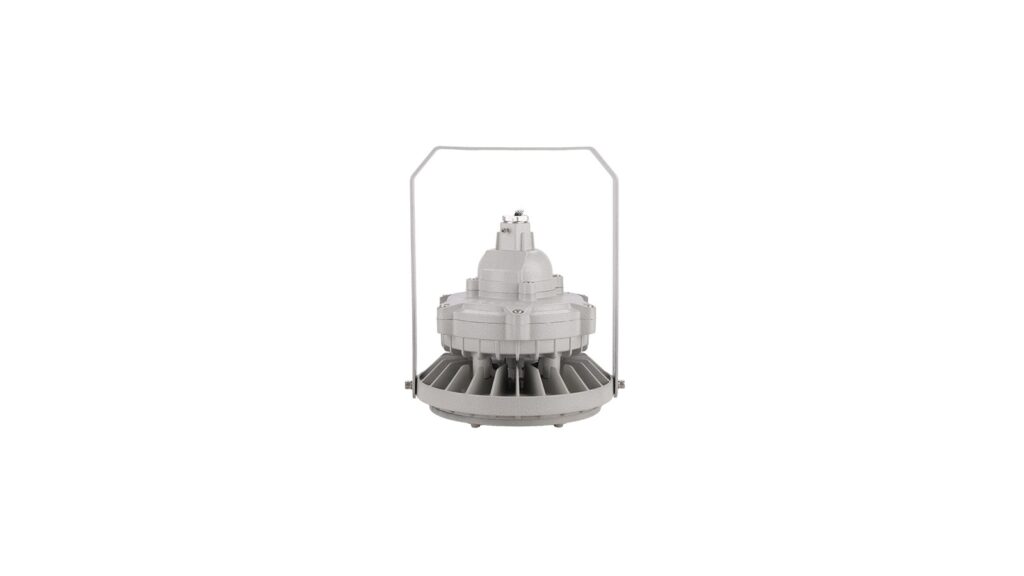
Image note: The representative website product photograph does not demonstrate an Article 1(1)(b) safety function or a particular system configuration. Verify exact model marking, certificate scope and current documentation.
ATEX safety devices outside hazardous areas: define the question
The European Commission's current ATEX guidelines reproduce Article 1 and discuss these devices in section 36. The relevant connection is explosion safety, not simply industrial control. The guidance distinguishes devices serving that purpose from controls unrelated to ignition or uncontrolled-explosion hazards. A safety function addressing another hazard does not automatically establish this ATEX scope.
For purchasing teams, the useful opening question is not merely where the cabinet stands. It is what the offered device is intended to do, for which identified equipment, and how the manufacturer describes that relationship. Treat those as separate fields in the enquiry. A location drawing and a product-scope statement should not be substituted for each other.
This guide addresses that scope question. It does not determine a category, design a control function or select a conformity-assessment procedure for an actual product.
Keep location and intended function in separate records
A quotation may describe a control unit as suitable for a non-hazardous location. Preserve that statement, but do not expand it into a conclusion that ATEX product requirements cannot apply. Equally, a reference to a hazardous-area project does not establish that every item in the quotation is an ATEX safety device.
Ask for a plain-language account of the proposed role, with the applicable product designation beside it. If the reply refers to a separate machine, system or document, record that reference rather than replacing it with a generic phrase such as plant protection. The reviewer needs to see the actual connection being claimed.
The following table is an editorial aid for organising that discussion, not a statutory classification test.
| Evidence question | Information to retain | Conclusion not supplied by that item alone |
|---|---|---|
| Where is the device intended to be located? | The documented location and environmental assumptions | Whether Article 1(1)(b) applies |
| What function is being claimed? | The manufacturer's intended-use description | Whether a familiar device name proves the claimed function |
| Which equipment or system does it serve? | An identified reference and the stated relationship | Whether the claim covers another configuration |
| What supports the scope position? | Relevant product documents and the responsible party's explanation | Whether the complete project has been approved |
Make the scope answer specific enough to review
A short clarification sheet can help separate unanswered questions from missing attachments. Start with the quoted designation and ask the supplier to identify the offered product's scope position. Keep the explanation next to the document that supports it, including its revision or issue where available.
Useful questions include:
- Is the offer describing the device alone, a defined combination or a wider commercial package?
- Which named equipment or protective system is relevant to the stated explosion-safety role?
- Where does the documentation describe the intended function and its boundaries?
- Which questions concern the supplied product, and which remain with the project reviewer?
These are document-management questions, not instructions to create or modify a safety function. If an answer uses an unfamiliar technical assumption, retain the wording and refer it to the competent reviewer. Do not simplify it into an acceptance statement merely to complete the purchasing record.
Keep three neighbouring topics distinct
An external safety device and an autonomous protective system are not interchangeable purchasing descriptions. Use the ATEX protective-systems guide when the question concerns the identity and supply boundary of a system intended to address an explosion. This article instead asks whether an externally located device has the relevant ATEX scope connection.
The IEC TS 60079-42 electrical safety-devices guide concerns a narrower technical document and its ignition-control scope. A title containing safety device is not sufficient to establish that its technical scope and this legal provision coincide in every case.
Likewise, keep a functional-safety claim in a separate evidence field. The SIL versus explosion-proof certification comparison explains why a capability label does not answer every Ex or system-level question. This scope guide assigns no SIL and makes no claim about achieved safety integrity.
Handle unclear answers without inventing a classification
Suppose an offer says outside the zone while an attachment refers to explosion safety. That is a reason to clarify the relationship, not proof that either document is wrong. Record the exact passages and ask which product and intended use each describes.
If the explanation remains incomplete, label the scope decision unresolved. A purchasing reviewer can record that a file was received without recording that the legal or technical conclusion was accepted. Keeping those outcomes separate makes later review more transparent.
A revised offer also deserves an explicit comparison. Note a changed product reference or altered scope description and ask whether the earlier explanation still applies. Preserve the response with the final quotation so the order does not silently inherit an answer given for a different proposal.
Primary sources and reading limits
The Commission's ATEX overview currently links the sixth-edition guidelines dated January 2026. The guidelines are explanatory material, not a replacement for binding legislation. This article uses Article 1(1)(b) and section 36 only for the scope distinction; the suggested enquiry record is an editorial workflow, not a prescribed conformity procedure. Applicable national implementation and other requirements still need competent review.
Current MMAIATEX certification status
MMAIATEX is the public brand of MMAIATEX Explosion-proof Technology (Zhejiang) Co., Ltd. On the review date, its About page describes ATEX, IECEx and CCC certification as in progress. That attributed website statement is not independent verification of any product certificate. This article announces no certified safety device, approved control combination or new supply capability.
Safety and legal disclaimer
This is general purchasing information, not legal advice, a product-scope determination or approval to operate equipment. Competent responsible parties must assess the actual product and application. Do not use this article to choose settings, wiring, fault responses, protection levels or operating conditions.
Contact MMAIATEX
Identify the offered product, destination market and the particular scope or documentation question. Keep the equipment reference and the stated function distinct so the enquiry does not imply an unverified product capability.