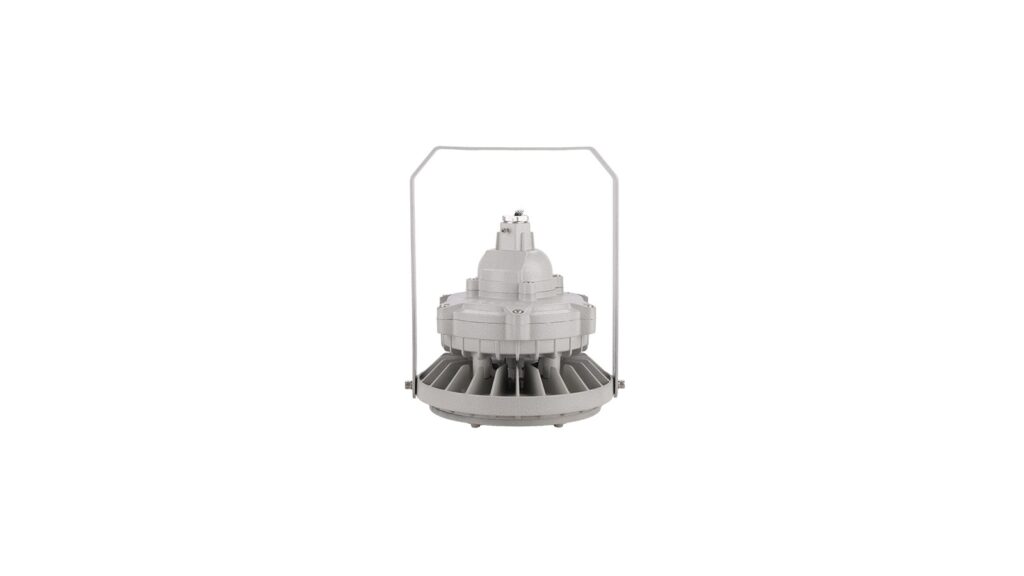
Image note: The representative website product photograph does not show a quality audit, manufacturing assessment or certified production process. Verify exact model marking, certificate scope and current documentation.
ISO/IEC 80079-34: what the current record says
The ISO catalogue currently lists ISO/IEC 80079-34:2018, Edition 2, as published. It also marks the standard for revision and identifies a Draft International Standard under development. A draft listing should not be presented as a completed replacement.
The public introduction and scope concern quality systems for Ex manufacture, including electrical and non-electrical equipment, protective systems, safety devices and components. This is not a catalogue of approved models.
For a quotation review, keep three questions separate: what standard is cited, what manufacturing activity the supplied evidence covers, and what exact product is being offered. A satisfactory answer to one does not silently answer the others.
Distinguish four kinds of evidence
The following comparison is an editorial aid for sorting a purchasing file, not a mandatory form or a reproduction of the standard's clauses.
| Information received | Question it can help address | What remains unresolved |
|---|---|---|
| A standard number in a brochure | Which reference is the supplier invoking? | Whether any assessment covers the claim |
| Quality-system assessment information | Which organisation, activity and scope were assessed? | Whether the proposed product matches its conformity records |
| Exact-product conformity documentation | Which model and configuration are described? | Whether the actual offer and delivery match those records |
| Order and manufacturing identifiers | Which construction is being supplied? | Whether all relevant evidence agrees with that construction |
Avoid treating the document with the most official-looking cover as the answer to every question. Record its purpose before judging its relevance. A complete file is not simply a large collection of PDFs; the documents need to describe the same offer without unexplained differences.
Begin with the claim, not a generic certificate demand
Copy the supplier's actual statement into the enquiry record. Does it say that a quality system was assessed, that a product is certified, or merely that a standard was considered? Those statements should not be rewritten as interchangeable promises.
Then identify the organisation making the claim and the supplied document's issuer. ISO explains that it develops standards but does not perform certification or issue certificates. A phrase such as certified by ISO therefore needs clarification rather than automatic acceptance.
Ask the supplier to explain which evidence answers the specific question. If the response only repeats a standard number, keep the supporting assessment unresolved. This does not prove a failure or a false claim; it means the purchasing file cannot yet support the conclusion someone wants to draw from it.
Keep manufacturing identity visible
A supplier's trading name, a manufacturer's legal name and a production address can appear in different places across an offer. Record those distinctions instead of assuming every document names the same party. Ask the supplier to explain an unexpected difference through the appropriate controlled records.
The same discipline applies to the offered construction. Preserve the complete model reference, options and relevant drawing or document revisions. If an enclosure, internal arrangement or supplied option changes during quotation, ask whether the earlier evidence still describes the revised offer.
These are suggested document-control questions, not instructions for conducting an audit. A buyer should not infer factory compliance from a photograph, an informal video or the neatness of a document folder. Nor should missing detail be filled with an assumed production location or a similar model's record.
Do not confuse a standard revision with a certificate decision
The 2018 standard's catalogue entry explicitly refers to ISO 9001:2015. Separately, the current ISO 9001 record lists ISO 9001:2026, Edition 6, published on September 16, 2026. These facts make precise edition recording important; they do not establish an automatic decision about any particular manufacturer's assessment.
Do not silently replace the edition written in an existing report with a newer number. Preserve what the report actually says and ask the responsible assessment body or manufacturer to explain any applicable update arrangements. This article sets no transition deadline and declares no certificate invalid because a related standard has changed.
When reviewing a document later, record the new review date as well as the original issue. That helps colleagues distinguish a recently checked older record from an unchecked copy whose age happens to look acceptable.
Use the existing guides for the separate product checks
The QAR versus CoC guide explains those IECEx records and their relationships. Today's narrower subject is interpreting the manufacturing-quality standard reference without mistaking it for the product conclusion.
For the subsequent exact-model review, use the certificate and ATEX document-verification guide. Where the enquiry concerns mechanical rather than electrical equipment, the non-electrical Ex equipment guide addresses a different product-scope question.
Keep each review's outcome labelled. Received is not the same as verified; a document can be authentic yet irrelevant to the offered configuration. An unresolved relationship should remain visible until the responsible parties provide an explained answer.
Primary-source limits
The linked catalogue and public preview establish publication identity and general scope. They do not supply a complete manufacturing audit checklist. This article does not reproduce the licensed standard or determine compliance with individual clauses. Its file-sorting table and enquiry sequence are original editorial suggestions, not newly imposed scheme requirements.
Current MMAIATEX certification status
MMAIATEX is the public brand of MMAIATEX Explosion-proof Technology (Zhejiang) Co., Ltd. On the review date, its About page states that ATEX, IECEx and CCC certification is in progress. That is an attributed website statement, not independent certificate verification. This article makes no claim that the company or an offered model has completed an ISO/IEC 80079-34 assessment.
Safety and legal disclaimer
This is general purchasing information, not a quality-system audit, certification decision, legal opinion or authorisation to install equipment. Competent responsible parties must assess the actual product, application and current documents. Neither a standard citation nor a representative photograph establishes hazardous-area suitability.
Contact MMAIATEX
Send the exact wording of the quality claim, the offered model, the relevant document references and the unresolved question. Keep assumptions separate from confirmed product information.