
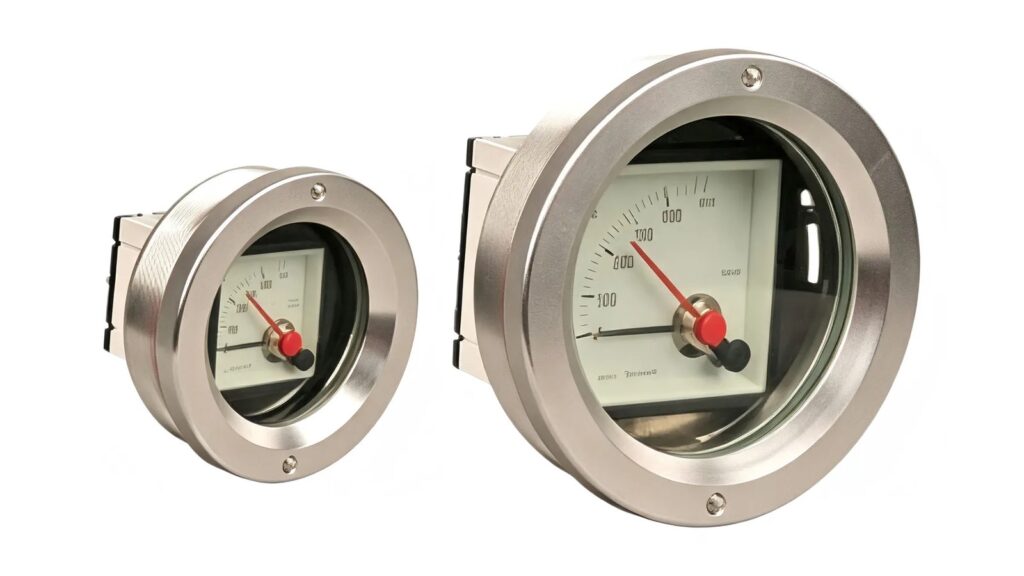
What Ex s special protection means
IEC 60079-33:2012, Edition 1.0, defines equipment protection by special protection s. Its public scope identifies three situations in which the Part 33 route may apply.
| Scope path | Public IEC description | Practical boundary |
|---|---|---|
| A different protection method | The method is not covered by another standard in the IEC 60079 series | The design still needs a documented safety case, evaluation, testing and verification |
| A recognised method used differently | A recognised type of protection is used, but the design or construction does not fully comply with its protection standard | Ex s does not erase unmet requirements or turn a failed design into acceptable equipment |
| Use beyond published scope parameters | The intended application is outside parameters covered by the relevant protection standard | Suitability must be established for the claimed EPL and exact application, not inferred from similarity |
Manufacturers should first consider recognised types of protection, combinations of those types and the methods addressed by IEC 60079-26. IECEx OD 233 places Ex s after that consideration, when those routes do not completely address the proposed design or use. A novel feature, prototype or one-off configuration does not qualify automatically.
Which edition is current in September 2026
IEC 60079-33:2012 was published on September 27, 2012. The IEC catalogue gives it a stability date of 2027. A stability date is a standards-maintenance milestone, not an expiry date and not the end date of a product certificate. The official IEC 60079:2026 Series, published July 23, 2026, still includes IEC 60079-33:2012. It would therefore be inaccurate to call the document IEC 60079-33:2026.
The current IECEx equipment-scheme standards page also lists IEC 60079-33. That listing shows that Part 33 is used within the IECEx Certified Equipment Scheme. It does not certify a manufacturer, model or shipment.
IEC 60079-0:2026, Edition 8.0, was published June 16, 2026 and has a stability date of 2029. It provides general construction, testing and marking requirements for Ex Equipment and Ex Components. Its catalogue entry does not by itself explain an Ex s design or prove conformity of one.
Ex s special protection levels and EPL mappings
IECEx OD 233 Edition 3.0, dated October 2022, sets out the IECEx assessment procedure for Ex s equipment. The following mappings and verifier pattern come specifically from that IECEx operational document.
| Ex s level | EPLs mapped in IECEx OD 233 | Independent-verifier pattern in OD 233 | What a buyer should conclude |
|---|---|---|---|
sa |
Ma, Ga or Da | Independent verifiers 1, 2 and 3 | The level must be read with the full marking, certificate and claimed EPL |
sb |
Mb, Gb or Db | Independent verifiers 1 and 2 | The suffix does not independently define atmosphere, group or temperature limits |
sc |
Gc or Dc | Independent verifier 1 | The exact equipment identity and evidence still control selection |
These verifier numbers describe the IECEx OD 233 process. They must not be presented as universal rules for ATEX, UKCA, North American approval or another conformity system. For help reading the wider marking, see how to read Ex markings and the guide to Equipment Protection Levels.
Evaluation, ExTR and IECEx CoC are not interchangeable
IECEx OD 233 allows an application for evaluation only or for evaluation and certification. It likewise distinguishes an output consisting of a test report from an output consisting of a test report plus a certificate. That distinction matters during procurement.
| Evidence stage | What it shows | What it does not prove by itself |
|---|---|---|
| Evaluation | The proposed Ex s protection and claimed EPL have entered the documented analysis, assessment, test and verification route | That an IECEx Certificate of Conformity has been issued or remains current |
| ExTR | The IECEx test report records the assessed design and applicable results within the scheme | That the report holder may treat it as a public product certificate for any model or variant |
| IECEx CoC | A Certificate of Conformity is the separate certification outcome for its identified scope and status | Suitability beyond the named equipment, options, schedules, conditions or controlled documents |
An ExTR should not be advertised as an IECEx CoC. A certificate number should also be checked against the exact legal manufacturer, model, suffix, issue, current status, standards, schedules and conditions. The MMAIATEX guide to verifying IECEx certificates and ATEX documents gives a practical review sequence. If a certificate carries an X or U suffix, use the separate IECEx X versus U guide to understand why the suffix changes the next check.
Buyer checklist for an Ex s offer
1. Fix the required duty before comparing products
Record the classified area, atmosphere, required EPL, equipment group, temperature information, ambient range, electrical duty and destination market. A protection suffix cannot replace those engineering inputs.
2. Match the exact supplied identity
Compare the legal manufacturer, model, variant, option codes and complete Ex marking with the offer, nameplate, certificate and schedule. A photograph, category name or visually similar enclosure is not enough.
3. Confirm the claimed Ex s level
Check whether sa, sb or sc is actually stated for the exact item and whether its documented EPL matches the project requirement. Do not assign an EPL from appearance or from the letter s alone.
4. Separate assessment records from certification
Determine whether the evidence is an evaluation, an ExTR, an IECEx CoC or a market-specific document. Verify the current public certificate record where applicable. Do not assume IECEx automatically supplies ATEX, CE, UKCA or any other market acceptance.
5. Review schedules, conditions and controlled instructions
Read the documents that define configuration, interfaces, installation, permitted options and limitations. Confirm that every proposed substitution or revision remains within the assessed identity.
6. Resolve component and assembly boundaries
Evidence for an Ex Component does not automatically establish conformity of the finished equipment or assembly. The responsible parties must resolve interfaces, thermal effects, installation conditions and the applicable conformity route using the exact controlled evidence.
Current MMAIATEX certification status
The public MMAIATEX About page states that ATEX, IECEx and CCC certification work is in progress. MMAIATEX Explosion-proof Technology (Zhejiang) Co., Ltd. does not present this guide, an IEC publication, an IECEx standards listing, an Ex s suffix or a representative photograph as proof that a particular product, component or assembly is certified.
Before selection or use, verify the exact legal manufacturer, model and variant, complete marking, certificate status and scope, schedules, controlled instructions, destination-market requirements and site conditions.
Safety and legal disclaimer
This article provides general technical and procurement education. It does not classify a hazardous area, select an EPL, validate a special-protection concept, approve a design, certify equipment, authorize installation or establish legal market access. Competent parties must use the current licensed standards, exact certificate and schedules, controlled manufacturer instructions, site safety procedures and applicable law. IEC publishes standards but does not certify individual products.
Request an Ex s evidence review
Send the classified-area basis, required EPL, atmosphere and group, temperature and ambient limits, exact model and marking, available assessment or certificate records, schedules, instructions, assembly interfaces and destination market. MMAIATEX can identify available product information for review by the responsible designer, installer and compliance team.