
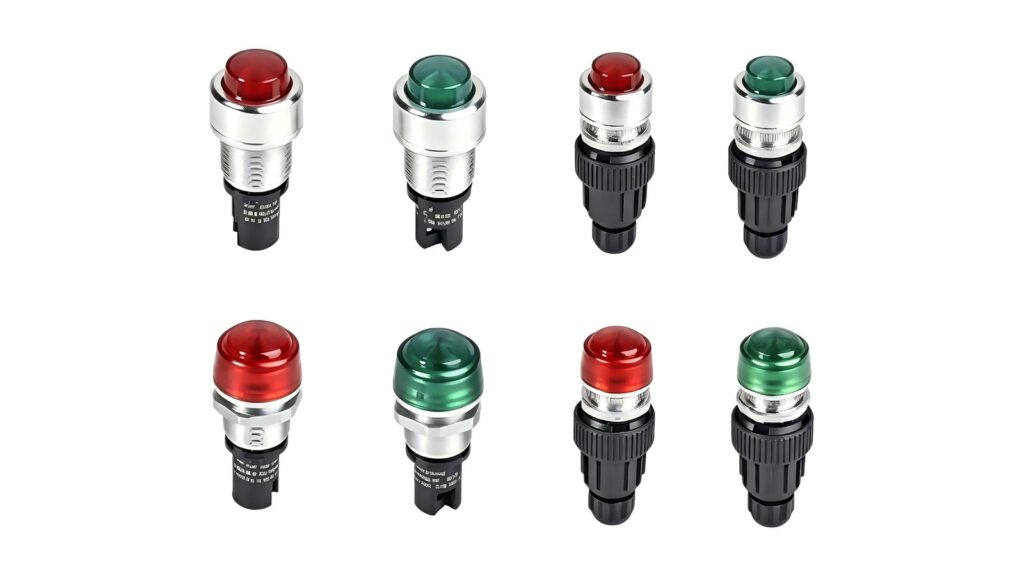
Zone 0 vs Zone 1 vs Zone 2 gas classification at a glance
The definitions below follow the EU workplace language in Directive 1999/92/EC. Other jurisdictions may use different legal wording, responsibility assignments or classification systems.
| Gas Zone | EU workplace definition in practical terms | What the Zone describes | What the Zone does not prove |
|---|---|---|---|
| Zone 0 | An explosive gas atmosphere is present continuously, for long periods or frequently | The expected frequency and duration of the atmosphere in a defined space | Gas group, temperature class, certificate status or equipment approval |
| Zone 1 | An explosive gas atmosphere is likely to occur occasionally in normal operation | A different expected pattern of presence in a defined space | A universal distance from a release source or a product selection |
| Zone 2 | An explosive gas atmosphere is not likely in normal operation and, if it occurs, persists only briefly | A lower expected frequency and duration than Zones 0 and 1 | A safe area, zero risk or permission to use ordinary equipment |
The three Zones do not rank the destructive force of an explosion. They describe the expected presence of the explosive atmosphere. Material properties, ignition consequences and risk controls still matter, but they answer different questions.
Do not convert these definitions into generic hours-per-year thresholds and present them as IEC rules. The UK HSE area-classification guidance notes that commonly quoted time values have not been officially adopted and that qualitative application is adequate in many cases. The accepted project method and applicable law must control the assessment.
Why gas area classification is three-dimensional
IEC 60079-10-1:2020 treats an area as a three-dimensional region or space where a flammable gas or vapour hazard may arise. A note saying "Zone 1 near pump" is therefore incomplete unless the controlled drawing or model shows where that classification begins, how far it extends horizontally and vertically, and which openings or connected spaces affect it.
Release momentum, density, temperature, obstacles and ventilation can change how gas or vapour moves. The classified volume may extend above, below or through an opening, so the drawing should show boundaries and supporting assumptions.
This is also why a buyer should not infer a Zone from a photograph or from the name of a room. Classification is an engineering output based on the installation and process, not the visual appearance of a location.
Inputs that determine Zone type and extent
A defensible gas hazardous area classification should trace each result to current inputs. At minimum, the responsible team should consider:
- Flammable material identity and relevant physical properties
- Credible sources of release and the conditions under which release can occur
- Release rate or release conditions established by the accepted method
- Process pressure, temperature, composition and operating modes
- Ventilation or dilution availability, effectiveness and reliability
- Openings, pits, ducts, drains, adjacent rooms and other connected spaces
- Normal operation and the abnormal conditions included by the project method
- Environmental conditions that can change dispersion
- Existing controls, detection and shutdown assumptions used in the assessment
- Planned changes to equipment, process, ventilation or building layout
Inputs should let another competent reviewer understand the conclusion. Where classification relies on forced ventilation, the dossier should state the assumed condition and how loss or degradation is addressed. A changed release source requires technical review before an old drawing supports a new purchase.
Zone classification is one input to equipment selection
A Zone number does not establish gas group, temperature class, Equipment Protection Level, type of protection, ambient range, certificate status, electrical duty, cable-entry arrangement or installation suitability. These fields must be checked separately against the exact installation and product evidence.
The MMAIATEX guide to Equipment Protection Levels explains the equipment-side risk reduction concept. The IEC 60079-14:2024 buyer checklist covers the wider document and installation-selection handoff. Those pages complement an area-classification dossier; they do not replace it.
Do not automatically translate between systems. The Class I Division 1 vs Zone 1 guide explains why a Division designation and a Zone designation are not identical labels. Gas Zones also must not be substituted for combustible-dust Zones. For dust hazards, see the separate Zone 20, Zone 21 and Zone 22 guide.
EU workplace category mapping has a jurisdiction boundary
Within the EU workplace context, Directive 1999/92/EC Article 7 assigns the classification of places into Zones to the employer. Article 8 requires an explosion-protection document that records the assessment, classified places and protective measures.
Annex II gives an equipment-category presumption: Category 1 in Zone 0, Category 1 or 2 in Zone 1, and Category 1, 2 or 3 in Zone 2, unless the explosion-protection document provides otherwise and provided the equipment is suitable for the relevant gas, vapour or mist. This is not a worldwide product-approval shortcut. Exact product evidence, marking, intended use and the workplace document still require verification.
What an area-classification dossier should contain
Before equipment is specified, request a controlled dossier that allows the classification to be understood and maintained:
- Identify the responsible organization, competent contributors, method, applicable law and standards basis.
- Record substances, process conditions, operating modes and credible release sources.
- Document ventilation or dilution assumptions and any dependencies on active systems.
- Show every Zone type and three-dimensional extent on controlled drawings or models.
- Identify unclassified areas, interfaces, openings and connected spaces where relevant.
- Record assumptions, exclusions, document revisions and unresolved actions.
- Connect the classified area to the equipment register without treating that register as the classification itself.
- Define change-control triggers and the party responsible for review.
Changes to process materials, pressure, temperature, release points, ventilation, walls, doors, drainage or operating practice can invalidate an earlier basis. Review the classification before relying on it for replacement equipment or a modified installation.
Common classification errors to stop before procurement
- Treating Zone 0, Zone 1 and Zone 2 as severity grades
- Showing a Zone number without its spatial boundary
- Selecting equipment from the Zone alone
- Applying unofficial annual-hour ranges as mandatory IEC limits
- Copying a classification from another site with different releases or ventilation
- Mixing gas Zones with dust Zones or North American Division terms
- Ignoring connected spaces, pits, drains or openings
- Reusing a drawing after process or ventilation changes without technical review
The UK HSE hazardous-area definitions are a useful official reference for the UK and EU-derived terminology, but local law and the project's accepted method remain controlling.
Current MMAIATEX certification status
The public MMAIATEX About page states that ATEX, IECEx and CCC certification work is in progress. MMAIATEX Explosion-proof Technology (Zhejiang) Co., Ltd. does not present this article, a Zone drawing, a standard reference, a product category or a representative photograph as proof that a particular product, assembly or installation is certified or suitable.
Verify the exact legal manufacturer, model and suffix, complete marking, current certificate status and scope, schedules, declarations where applicable, special conditions, instructions, destination-market requirements and site conditions before selection or use.
Safety and legal disclaimer
This article provides general educational information. It does not classify a real site, draw Zone extents, assign a release grade, calculate ventilation, select or approve equipment, perform a conformity assessment or provide legal advice. Competent parties must use current material and process data, current licensed standards, the accepted project method, exact product documentation, applicable law and site safety procedures.
The public scope of IEC 60079-10-1 excludes certain situations, including firedamp mines, explosives manufacture, specified catastrophic failures or rare malfunctions, medical rooms, domestic premises and combustible-dust hazards. Its strict application may also be inappropriate for some flammable mists. A competent reviewer should confirm that the selected method fits the actual hazard.
Request an area-classification document review
Send the controlled Zone drawing, substance data, release-source schedule, process conditions, ventilation basis and destination-market requirements. MMAIATEX can identify available product documentation for review after the responsible site team establishes the classification and selection criteria.