
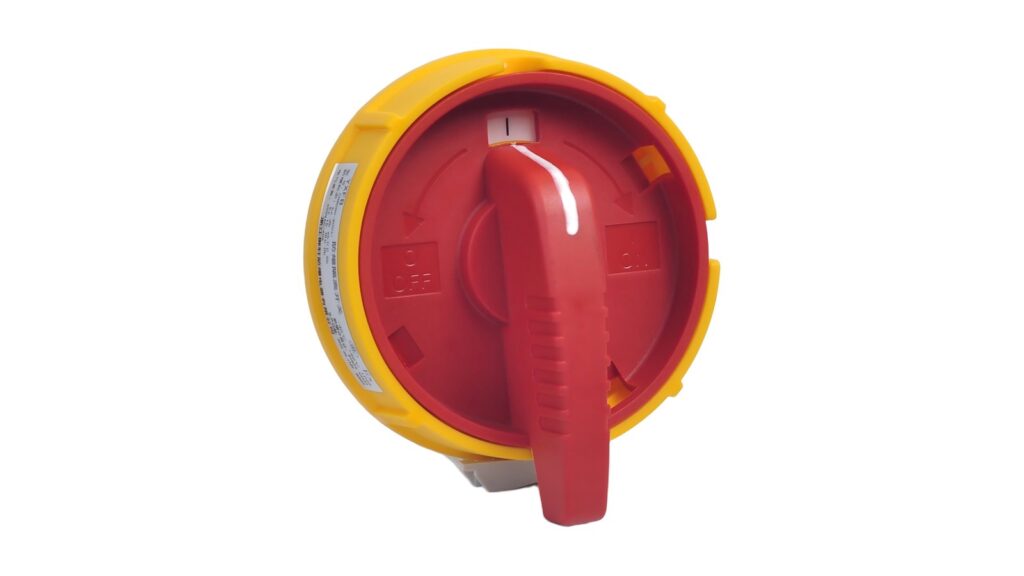
This is not an MMAIATEX product marking. A complete nameplate may also contain an ATEX line, certificate references, ambient limits, electrical ratings, IP protection, manufacturer information and warnings.
Read the marking in sections
Two conceptual examples are:
II 2G Ex db IIC T4 Gb
II 2D Ex tb IIIC T135°C Db
The meaning becomes clearer when each section is reviewed separately.
1. Understand the ATEX equipment classification
InII 2G, the elements mean:
IIis ATEX equipment group II for places other than mines susceptible to firedamp.2is ATEX category 2, intended to provide a high level of protection.Gidentifies an atmosphere involving gas, vapour or mist.
For combustible dust, the atmosphere letter isD.
Do not confuse ATEX equipment groupIIwith IEC gas subgroupsIIA,IIBandIIC. They appear in different positions and describe different parts of the selection.
2. Identify the protection concept
TheExsymbol introduces the explosion-protection coding. The following letters identify the protection concept and level.
Common examples include:
db: flameproof enclosure with level of protectiondbeb: increased safety with level of protectionebia: intrinsic safety with level of protectioniatb: dust ignition protection by enclosure with level of protectiontb
These are different engineering methods. Their construction and installation requirements differ. Increased-safety equipment cannot be treated as flameproof equipment merely because both may be used in a hazardous area.
3. Read the gas subgroup
Electrical equipment for explosive gas atmospheres uses Group II with subgroups:
IIAIIBIIC
The required subgroup comes from the hazardous substance and approved area-classification information, not the industry name alone. In the example,IICis the gas subgroup covered by the marking. The certificate and instructions must still be checked.
4. Read the dust group separately
Combustible-dust equipment uses Group III:
IIIAfor combustible flyingsIIIBfor non-conductive dustIIICfor conductive dust
Gas and dust groups are not interchangeable. A marking for one does not establish suitability for the other.
5. Interpret the Equipment Protection Level
The final letters, such asGa,Gb,Gc,Da,DborDc, identify the Equipment Protection Level.
| Atmosphere | Continuous, long or frequent occurrence | Occasional occurrence in normal operation | Unlikely or brief occurrence |
|---|---|---|---|
| Gas | Zone 0, EPL Ga | Zone 1, EPL Gb | Zone 2, EPL Gc |
| Dust | Zone 20, EPL Da | Zone 21, EPL Db | Zone 22, EPL Dc |
This is the common zone and EPL relationship. Local regulations or project assessments may add requirements.
For a broader selection workflow, see theZone 1 Explosion-Proof Junction Box Selection Checklist.
6. Read gas temperature classes
Gas equipment commonly uses temperature classes from T1 to T6.
| Temperature class | Maximum surface temperature |
|---|---|
| T1 | 450°C |
| T2 | 300°C |
| T3 | 200°C |
| T4 | 135°C |
| T5 | 100°C |
| T6 | 85°C |
T4limits the assessed maximum surface temperature to 135°C under the covered conditions.
A higher class number has a lower maximum surface temperature. Suitability still depends on the substance, equipment duty, ambient conditions and required safety margin.
7. Read dust temperature marking differently
Dust equipment is commonly marked with a stated maximum surface temperature, such asT135°C, rather than only a gas-style T class.
Selection must consider ignition temperatures of the dust cloud and accumulated layers. Layer thickness and installation conditions can affect the assessment. Do not copy a gas T class into a dust specification.
8. Check the ambient range
An ambient marking may appear as:
-40°C <= Tamb <= +55°C
Do not assume suitability outside that range. Direct sunlight, process heat, cold starts and internal heat rise can affect the real condition.
If the visible label does not show an ambient range, consult the current certificate, applicable standard edition and manufacturer instructions rather than assuming a value.
9. Read certificate suffixes and references
A certificate ending inXhas specific conditions of use, which may include installation or environmental limits.
A number ending inUnormally identifies an Ex Component. A component requires further assessment when incorporated into complete equipment and should not automatically be used as standalone equipment.
The certificate number, online record, model and marking should all agree.
10. Check what the marking does not prove
An IP code describes protection against access, solids and water. It does not replace Ex protection. An Ex marking also does not prove chemical compatibility, suitability outside the stated ambient range, acceptance in every country, coverage of modifications, current certificate status or correct installation.
TheATEX vs IECEx buyer guideexplains why similar technical codes do not make the two conformity systems identical.
A practical approval check
Before approving equipment:
- Match the legal manufacturer, model, label, certificate and datasheet.
- Confirm protection concept, EPL and gas or dust group.
- Verify temperature and ambient limits.
- Read all
Xconditions. - Confirm glands, stopping plugs and accessories.
- Check destination-market requirements.
- Obtain competent project approval.
Current MMAIATEX certification status
MMAIATEX currently states that itsATEX, IECEx and CCC certification work is in progress.
Do not treat an MMAIATEX model as certified from this example, a category or a photograph. Verify current model-specific documents before selection.
Call to action
Send the required marking, area-classification details and destination-market requirements through theMMAIATEX contact page. Treat any initial response as product information until it is supported by the applicable current documents.
Safety notice
This article is a general introduction. Ex marking interpretation and equipment selection must be completed or approved by competent personnel using the current certificate, instructions, area-classification dossier, applicable standards and local regulations.