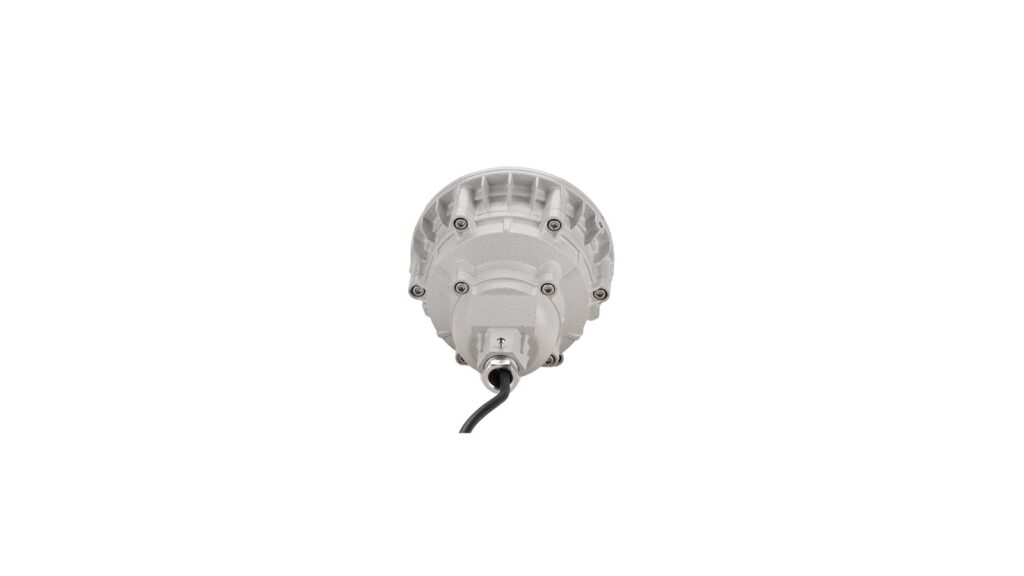
Image note: The representative website product photograph is not an EMC test, an ATEX assessment or proof of approval. Verify exact model marking, certificate scope and current documentation.
EMC vs ATEX: begin with the question being answered
The European Commission's EMC overview identifies Directive 2014/30/EU and describes its concern with emissions and immunity when equipment is used as intended. An EMC-related document therefore needs an identifiable equipment scope and a clear explanation of the claim it supports.
The Commission's ATEX overview identifies Directive 2014/34/EU, covering equipment and protective systems intended for use in potentially explosive atmospheres. Its product-conformity question is not replaced by an electromagnetic compatibility report.
This distinction does not mean that every industrial item necessarily falls under both directives. Applicability depends on the product and relevant legal scope. Ask the responsible compliance reviewer to identify that scope rather than adding two unexplained ticks to a purchasing form.
Keep four entries in the purchasing review
The following table is an editorial document-management aid. It is not a prescribed conformity-assessment procedure or a list of documents required for every product.
| Review entry | Question to resolve | Unsupported shortcut |
|---|---|---|
| EMC evidence | Which compatibility claim and configuration are addressed? | Treating it as explosion-protection evidence |
| ATEX evidence | Which product and explosive-atmosphere scope are addressed? | Treating it as proof of every electrical claim |
| Shared product identity | Do the documents refer to the same offered item? | Matching only the brand or enclosure appearance |
| Application decision | What has the responsible reviewer accepted? | Treating received documents as completed acceptance |
Keep the original attachment behind each entry. A spreadsheet should help a reviewer find evidence, not replace the conditions and identifiers in that evidence.
Describe the offered configuration before sorting reports
Write the full ordering reference and the offer revision at the start of the file. If the quotation includes options, accessories or a separate supply arrangement, ask the supplier which documents describe that complete proposal. Record the answer in the supplier's terms rather than assuming what the options change.
A report may identify a test specimen more specifically than a brochure identifies the product family. Preserve both descriptions and obtain the explanation connecting them. A similar photograph or a shared family name is not that explanation. Where a report contains qualifications, keep them with the summary sent to the technical reviewer.
For example, a hypothetical offer might include a base device and an optional interface, while an attachment names only the base reference. The useful question is whether the supplier's evidence addresses the offered configuration. The buyer should not declare the interface covered or excluded merely from the document title.
Ask what a document supports, not whether it looks official
Start with the document's own description, issuer, identifier, date and stated scope. Ask the supplier which claim the attachment is intended to substantiate. A test report, a declaration and a certificate are not labels to exchange simply because all three arrive in a compliance folder.
If the supplier sends an EMC attachment in response to an ATEX question, acknowledge the attachment accurately and leave the original question open. The document may have a legitimate purpose elsewhere in the review. What remains missing is an answer connecting the requested explosion-protection claim to the exact offered item.
The IECEx and ATEX document-verification guide provides a separate route for checking product-document identity and status. This article addresses the earlier task of keeping unlike conformity questions from being merged.
A CE mark is not a substitute for the underlying review
The Commission's CE marking explanation describes the manufacturer's conformity responsibilities and explicitly states that the mark does not mean the EU or another authority has approved the product as safe. Reading a visible mark therefore does not finish a buyer's evidence review.
Ask for the documentation that explains the manufacturer's claim for the identified product. Have the responsible reviewer assess the stated legal references and their relevance. Do not conclude that a familiar symbol supplies a missing report, establishes every possible approval or settles whether the product suits the actual installation.
Where the uncertainty is about a standard reference rather than the product identity, use the separate ATEX harmonised-standards guide. A citation question and an EMC-versus-ATEX scope question should not be collapsed into one generic standards check.
Preserve open questions when the offer changes
Keep a short discrepancy record with the exact wording that needs clarification. Identify the source attachment, the offered configuration and the person responsible for the decision. A useful entry might ask which document connects an option in the revised quotation to the claim already under review.
Retain the previous offer when a new revision arrives. Flag changed identities and document references for the responsible reviewer, without assuming that every difference has the same consequence. The purchasing task is to make the change visible; the technical or legal conclusion belongs to the competent decision-maker.
At handover, distinguish evidence received from scope reviewed and acceptance completed. If a decision remains conditional, transfer the condition with the record. Avoid a single compliant label that conceals unresolved EMC or explosion-protection questions.
The IECEE CB versus IECEx guide addresses a different confusion between assessment routes. Neither that comparison nor this one turns one kind of evidence into another.
Primary sources and reading limits
The linked Commission pages were reviewed on October 17, 2026. They support the limited directive-scope and CE-marking distinctions above. This article does not reproduce detailed legal procedures, decide an exclusion or prescribe an EMC test. The purchasing workflow is original editorial guidance, not a Commission checklist. Product-specific applicability requires the relevant current legislation and competent review.
Current MMAIATEX certification status
MMAIATEX is the public brand of MMAIATEX Explosion-proof Technology (Zhejiang) Co., Ltd. On the review date, its About page describes ATEX, IECEx and CCC certification as in progress. This is an attributed website statement, not independent certificate verification. No EMC result, ATEX approval or certified product configuration is announced here.
Safety and legal disclaimer
This article is general purchasing information, not legal advice, a conformity assessment, electrical design or permission to install or operate equipment. Competent professionals must establish applicable requirements and assess the actual configuration, documents and application. Do not conduct interference tests or modify equipment using this comparison.
Contact MMAIATEX
Send the proposed product reference, destination market and the specific document-scope question. Identify which conformity claim remains unclear without assuming an approval or capability that has not been established.