
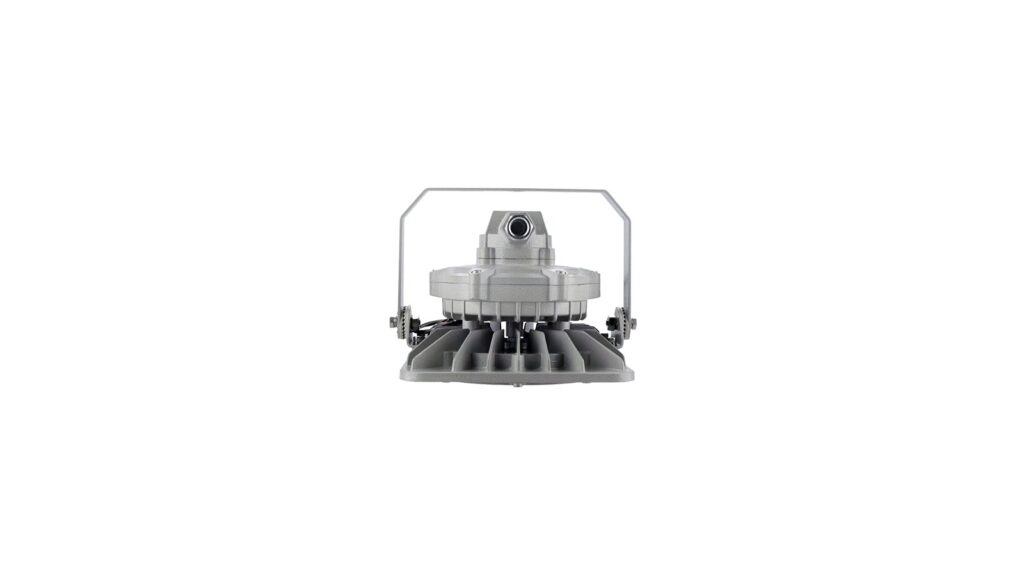
Image note: The representative website photograph shows a luminaire, not a pressure instrument or pressure test. Verify exact model marking, certificate scope and current documentation.
Gauge vs absolute pressure: identify the reference first
The U.S. Department of Energy's thermodynamics fundamentals handbook, printed pages 9 and 10 of Module 1, explains the two references. It gives the relationship as absolute pressure equals atmospheric pressure plus gauge pressure. The values must use consistent units and the relevant atmospheric reference.
This is a June 1992 training handbook hosted on DOE's website, not a new pressure-equipment standard. Its definition is useful here; its illustrative atmospheric value is not a substitute for a project's actual reference. This article does not provide a conversion calculator, operating limit or calibration procedure.
For purchasing, the first question is therefore not which instrument looks suitable. It is whether everyone is describing the same quantity. Ask the document owner to state the reference in words wherever a shorthand label could be misunderstood.
Preserve four fields when transferring pressure data
The table below is an editorial handover aid, not a required engineering form. Its purpose is to prevent an incomplete number from becoming an apparently settled specification.
| Field | What to retain | What to ask if missing |
|---|---|---|
| Quantity | The complete pressure description | Which reference does the requirement use? |
| Value and unit | The source entry without silent conversion | Who will confirm an intended conversion? |
| Purpose | Whether the entry describes an operating condition, requested range or other limit | What decision is this particular figure intended to support? |
| Evidence identity | Document name, revision and relevant page | Which controlled record should the supplier answer against? |
Keep the original attachment available even when its information is entered into a spreadsheet. A simplified column heading may remove the distinction that made the original record understandable. A reviewer should be able to trace a requirement back without reconstructing another person's assumptions.
Do not treat a familiar unit as a complete description
A unit label and a reference answer different questions. If an enquiry lists only a unit and a number, ask for the missing basis rather than assuming it from the application or the appearance of the equipment. Preserve supplier notation, but also request a plain-language explanation when its meaning is uncertain.
Imagine two quotation rows that show the same numerical range. One response identifies its reference; the other leaves that field blank. The editorial recommendation is to mark the second response incomplete, not equivalent. This is an illustrative document-review situation, not a report of a MMAIATEX customer project.
Do not edit the incomplete response into agreement on the supplier's behalf. Record the clarification question, obtain the written answer and attach it to the relevant quotation revision. That preserves who supplied the missing information and which offer it describes.
Separate measurement terminology from equipment limits
The reference question should not replace the review of the manufacturer's limits. Keep the requested measurement range, the stated process conditions and any other declared pressure limits in separately labelled fields. Ask the responsible engineer which records are required for the actual application.
Avoid copying a number from one field into another simply because both contain the word pressure. If the supplier uses different terms across a drawing, data sheet and quotation, request a reconciled explanation. Retain the source wording until the relationship is resolved instead of creating an unsupported common label.
For instruments that change a switching output, the separate pressure-switch FAQ addresses switching-duty questions. This article concerns the pressure reference carried through the enquiry. It does not specify switching points, reset behaviour or a continuous measurement system.
Make a disagreement actionable
A useful clarification identifies the two conflicting records and asks one answerable question. For example: the project schedule states an absolute-pressure requirement, while the quotation does not identify a reference; please confirm the offered basis and return the corresponding document. This wording requests evidence without deciding the engineering issue in advance.
Organise the response in a short decision record:
- Identify the requirement and the offered configuration being compared.
- State the unresolved reference or terminology question.
- Name the person responsible for the technical disposition.
- Retain the supplier's response and any revised document.
- Record whether the question is resolved or still prevents acceptance.
These are suggested procurement controls, not clauses quoted from a standard. Their value is a clear handoff between people. A green spreadsheet cell without its supporting answer is less useful than a plainly identified open question with an owner.
Keep process and Ex reviews distinct
An agreed pressure reference does not settle the hazardous-area review. Use the certificate-verification guide to organise questions about the exact equipment identity, claimed documents and current status. Do not let a correct terminology answer stand in for those records.
Where the project also raises a process-to-electrical sealing question, consult the separate process-seal scope guide. That subject concerns a different boundary. A reference label does not identify a seal arrangement or authorise changes to one.
The same separation is useful when reviewing substitutions. Ask whether the revised offer answers the original enquiry and which documents changed. Do not carry an earlier approval forward merely because the new quotation repeats the same pressure number.
Source scope and review limits
The DOE handbook supports the short terminology explanation above. The purchasing table, clarification example and handover sequence are original editorial suggestions. No pressure values, model performance, project classification or standard-compliance results have been inferred from the representative photograph. Detailed selection remains with the responsible project specialists and the current equipment documents.
Current MMAIATEX certification status
MMAIATEX is the public brand of MMAIATEX Explosion-proof Technology (Zhejiang) Co., Ltd. On the review date, its About page describes ATEX, IECEx and CCC certification as in progress. This is an attributed website statement, not independent verification of a model's certificate. This article announces no pressure-instrument product, certification or measured performance.
Safety disclaimer
This is general purchasing information, not pressure-system design, calibration advice, an installation procedure or permission to change operating conditions. Competent personnel must resolve the actual application and applicable safety requirements. Do not open, adjust, pressurise or modify equipment based on this guide.
Contact MMAIATEX
Send the proposed equipment reference, the original pressure requirement and the specific document question that remains unresolved. Identify the pressure reference explicitly so the enquiry does not depend on an assumed meaning.