
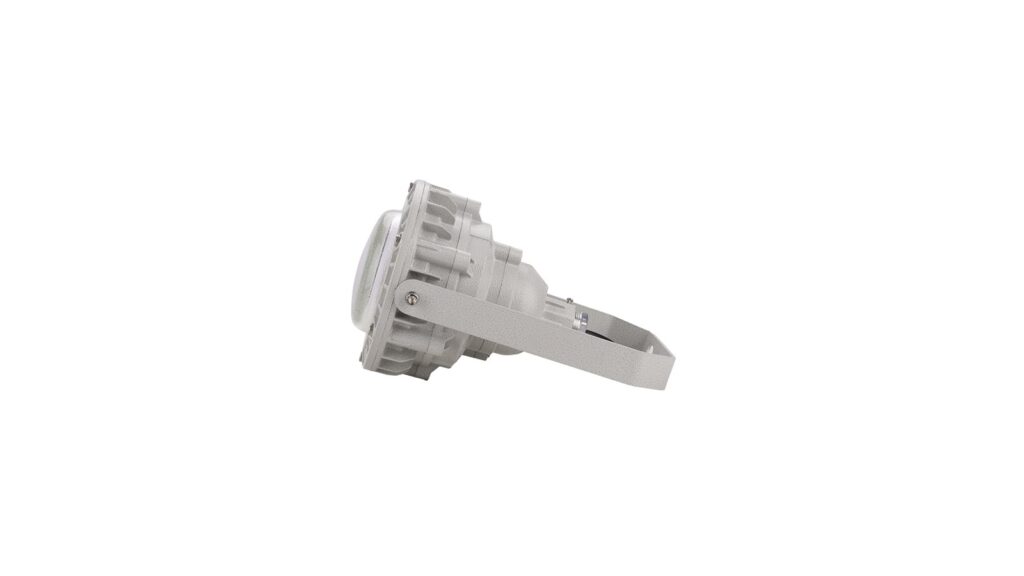
Image note: The representative website photograph shows a luminaire, not a pressure transmitter. It is not evidence of transmitter construction, measurement performance or approval. Verify exact model marking, certificate scope and current documentation.
Explosion-proof pressure transmitters: organise the evidence
This table separates four purchasing questions. It is an editorial aid, not a transmitter specification or an installation checklist.
| Purchasing question | Evidence to identify | What not to infer |
|---|---|---|
| What must be measured? | Defined pressure quantity and project duty | That a range alone describes the task |
| What information is delivered? | Documented output and receiving-system needs | That every transmitter has the same interface |
| What assembly is offered? | Complete model, options and associated parts | That a family report covers every combination |
| What supports the Ex claim? | Exact marking, scope and conformity records | That measurement evidence establishes approval |
1. How does a pressure transmitter differ from a pressure switch?
A transmitter provides measurement information rather than only the switching decision described in the separate pressure-switch buyer FAQ. Some products combine functions, so identify what the proposal actually includes.
For one sensing principle, WIKA's resistive-transmitter explanation describes pressure being converted into a proportional electrical signal. That first-party example does not establish every transmitter's construction or output. State whether the project needs a measured value, a switching action or both.
2. Should an enquiry name the receiving instrument?
Yes. Identify where the measurement information must go and which project document defines that interface. Ask the supplier to describe the offered output using the complete designation in its controlled documentation, including relevant options.
Have the responsible designer assess compatibility with the receiving equipment. Similar catalogue wording does not settle the complete interface question. This FAQ supplies no wiring diagram, terminal assignment, communications setting or permission to connect an instrument.
3. Is a pressure range enough to identify the measurement?
No. Preserve the pressure quantity, reference basis, units and stated conditions alongside the range. Ask the project team to resolve an incomplete description before treating two quotations as equivalent.
This question concerns the identity of the required measurement, not an instruction to choose a range. Keep measurement information separate from any other pressure limits stated in the documentation. Do not silently substitute a test condition or a process limit for the required measurement range.
4. What does the current IEC pressure-transmitter record cover?
The IEC 62828-2:2026 catalogue describes specific testing procedures for pressure process measurement transmitters used in industrial-process and machinery measuring and control systems. It identifies Edition 2.0, published June 11, 2026, replacing the 2017 first edition.
That scope helps identify the subject of a cited standard. It does not establish that a particular transmitter was tested, that its report is applicable or that the device has Ex approval. Request the actual supporting evidence.
5. How should a test report be connected to the offer?
Compare the report's item identification with the full ordering reference in the quotation. Retain the report identifier, issue, tested configuration and stated conditions. If the commercial name is broader than the report description, obtain the supplier's explanation of the relationship.
Keep any qualification with the result when preparing a summary. Do not label the whole product family tested when the attachment identifies a narrower specimen or configuration. The responsible reviewer must decide the significance of the evidence.
6. Can two accuracy claims be compared directly?
Only after their meaning and stated conditions are clear. Ask what each claim describes, which configuration it concerns and where its definition can be found. Preserve the supplier's original terminology rather than changing unlike statements into one unexplained accuracy column.
If a project requirement is expressed differently from the offer, record that difference for the measurement specialist. This FAQ does not select a tolerance, rank manufacturers or promise performance for a particular transmitter.
7. Does a local display identify the transmitted output?
No conclusion about the complete output arrangement should be drawn from a display photograph. Ask the supplier to distinguish the displayed information, transmitted information and any separately documented switching function.
Retain the model and option references that identify those features. If the project needs information at both the instrument and a remote receiving system, describe both needs. Do not infer an interface, update behaviour or supported function from the appearance of the enclosure.
8. How does a remote seal affect the evidence question?
Identify whether a remote seal is included and how it relates to the offered transmitter. The IEC catalogue above states that when the remote seal cannot be separated from the pressure transmitter, the complete device is tested.
Ask which assembly the supplied report actually identifies. This limited scope point does not approve an arbitrary combination. Do not confuse a remote measurement-seal arrangement with the separate migration-boundary subject discussed in the process-seal scope guide.
9. What information belongs with the process connection?
Provide the project's identified medium, connection description and documented service conditions for review. Ask which offered parts contact the process and where their stated limitations are recorded. Missing compatibility information should remain an open question, not a buyer's assumption.
A matching thread name is not a complete assessment of the supplied arrangement. This FAQ does not prescribe adapters, sealing materials, mounting details or installation work. Those decisions require the actual product records and competent project review.
10. Does a measurement standard establish explosion protection?
No. The IEC 60079-0:2026 catalogue addresses general construction, testing and marking requirements for Ex equipment and components. That is a separate scope from the pressure-transmitter testing record discussed above.
Use the IECEx and ATEX document-verification guide to organise the exact model, marking and relevant conformity evidence. Do not transfer an approval from another option, similar housing or unrelated measurement report.
11. What if the transmitter contributes to a safety function?
Identify that assigned duty explicitly and refer it to the responsible functional-safety reviewer. Preserve the project requirement rather than deriving it from the transmitter's Ex description or ordinary measurement claims.
The SIL versus explosion-protection guide explains that separate evidence question. This FAQ assigns no SIL, shutdown capability, reliability figure or diagnostic performance. It does not turn a component-level statement into acceptance of a complete safety function.
12. What should purchasing retain before the order is finalised?
Keep the measurement brief, supplied-item reference, output description, configuration evidence, relevant reports, separate Ex records and the responsible review outcome together. Retain the revision of each offer and the answers to any discrepancies.
If the transmitter, seal, interface or stated service conditions change, make that difference visible to the reviewer. Do not carry an earlier acceptance forward without checking its scope. This is an editorial handover recommendation, not a mandatory procedure reproduced from the standard.
Current MMAIATEX certification status
MMAIATEX is the public brand of MMAIATEX Explosion-proof Technology (Zhejiang) Co., Ltd. On the review date, its About page describes ATEX, IECEx and CCC certification as in progress. This is an attributed website statement, not independent verification. This article announces no available or certified MMAIATEX pressure transmitter, remote seal or complete measurement assembly.
Safety and legal disclaimer
These answers are general purchasing information, not pressure-system design, calibration guidance, legal advice or permission to install equipment. Competent professionals must assess current requirements and exact product records. No pressure setting, test method, connection procedure or field modification is supplied here. Public catalogue scopes do not replace the full applicable documents.
Contact MMAIATEX
Send the proposed equipment identity, measurement task and specific documentation question. Identify unresolved requirements without assuming a product capability, availability or approval that has not been established.