
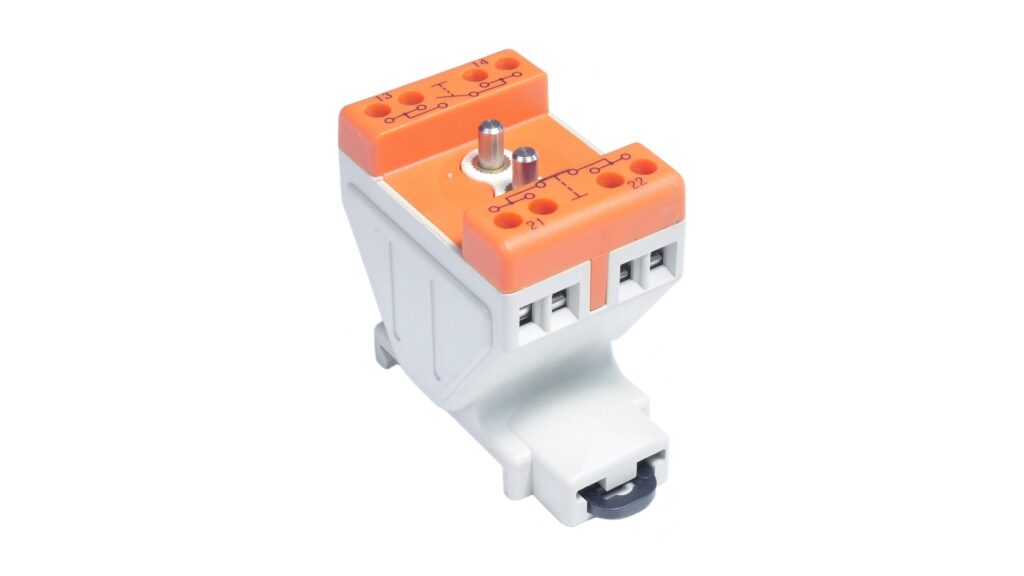
Image note: The representative photograph shows a contact block with terminals, illustrating conductor-documentation and interface context. No conductor cross-section is visible or measured. The image establishes no conductor area, cable diameter, current capacity or compatibility. Verify exact model marking, certificate scope and current documentation.
What nominal conductor cross-sectional area tells a buyer
LAPP's public Technical Tables T11 explains nominal cross-sectional area as a conductor-size identifier that is not directly measured. That sheet attributes its explanation to IEC 60228:2004. It is used here for this limited terminology explanation, not as the current standard's numerical acceptance table.
The current IEC 60228:2023 catalogue identifies Edition 4.0, published December 11, 2023. Its public scope covers nominal conductor areas together with wire-size, wire-count and resistance requirements. It also states that applicability depends on the standard for the cable type. This guide does not reproduce the paid requirements or claim that the free preview exposes the complete definitions.
For a buyer, the practical distinction is between identifying what was ordered and recording a physical dimension. A quotation can correctly give a nominal conductor size while still leaving an entry-diameter question unanswered. Treating the first field as the second loses information rather than completing the comparison.
Four fields that should not share one heading
This is an editorial comparison aid, not a cable acceptance or design procedure.
| Field in the offer | What the field concerns | Clarification before using it |
|---|---|---|
| Nominal conductor area, commonly in mm² | The stated conductor size | Which cable and conductor designation does it identify? |
| Conductor dimension, commonly in mm | A specified dimension of the conductor | What dimension, construction and qualifier are stated? |
| Finished-cable outside diameter, commonly in mm | The outside of the identified complete cable | Is the figure nominal, approximate or a documented dimensional range? |
| Terminal connection information | The exact terminal's permitted conductor arrangement | Which conductor types and preparations does the record cover? |
The units help reveal a mismatch, but they are not enough by themselves. Two fields expressed in millimetres might concern different surfaces. A heading such as "cable size" conceals that distinction; replace it with the actual quantity before comparing offers.
Why the same number can answer the wrong question
Consider a hypothetical enquiry asking for the outside diameter of a finished cable. The reply contains only a conductor-size designation in square millimetres. Nothing in that reply establishes the requested outside dimension. The correct follow-up is to identify the missing cable-diameter field, not to rename the supplied value or perform a geometric conversion.
Now consider a second reply giving a dimension in millimetres but labeling it "conductor diameter." The unit looks plausible for an entry comparison, yet the subject is still the conductor rather than the finished cable. The discrepancy remains even if both documents carry the same cable family name.
These examples illustrate quotation interpretation, not actual customer cases. They also explain the limit of the existing cable gland selection FAQ: knowing that a gland needs appropriate cable-diameter information does not make every size figure an acceptable substitute for it.
Separate the terminal question from the entry question
At a terminal, the review concerns the conductor arrangement documented for that exact connection. IEC 60947-7-1:2025, Edition 4.0, addresses terminal blocks for copper conductors within its defined scope. A standard reference does not tell a buyer which conductor an individual terminal accepts. The terminal-block buyer FAQ covers that wider selection question.
At the enclosure entry, the question concerns the identified cable and the proposed entry component. Browsing the listed cable-entry products helps identify the product family under discussion; the cards do not supply a verified fit between a particular cable and gland.
A single cable schedule can serve both reviews, but only if it preserves their separate fields. Do not let a completed terminal column automatically mark the gland column complete. Equally, a cable that has been dimensionally identified at the entry has not thereby been approved for the proposed electrical connection.
Read qualifiers before comparing two offers
Words such as nominal, approximate, minimum, maximum and range change what a figure says. Preserve the qualifier when transferring a value into a comparison sheet. Removing it can make a general catalogue dimension look like a guaranteed acceptance limit.
Keep the cable's exact designation beside the dimensional information. If a supplier offers an alternative construction, compare the new record on its own terms rather than assuming a retained nominal conductor size preserves every other dimension. A familiar size label should not hide a changed cable identity.
When the documents disagree, state the discrepancy narrowly. For example: "The cable schedule identifies the conductor size, while the entry review still lacks the finished-cable diameter basis." This is more useful than rejecting the entire offer as incorrectly sized or treating an empty field as a match. The responsible supplier or designer can then address the actual missing information.
Boundaries of this comparison
No current-carrying capacity, voltage drop, temperature rise, terminal acceptance or hazardous-area suitability can be established from the comparison table above. Nor does it instruct anyone to measure, strip, reshape or test a conductor. Those decisions require the applicable standards, controlled product information and competent engineering review.
IEC 60079-0:2026 separately addresses general construction, testing and marking requirements for Ex Equipment and Ex Components. Neither a conductor-size designation nor an outside-diameter match replaces the evidence for the complete hazardous-area arrangement.
Current MMAIATEX certification status
The public MMAIATEX About page describes ATEX, IECEx and CCC certification as work in progress. This is the company's published statement, not independent verification of a particular certificate. MMAIATEX Explosion-proof Technology (Zhejiang) Co., Ltd. does not present this guide, catalogue link or representative photograph as approval of a conductor, terminal, gland or assembly.
Safety and legal disclaimer
This article explains quotation terminology. It is not a cable-sizing calculation, inspection method, termination instruction, hazardous-area assessment or legal opinion. Responsible competent parties must apply the current requirements and exact configuration documents before selection or use.
Contact MMAIATEX
Include the cable designation, the exact field needing clarification and the relevant terminal or entry reference in an enquiry. Keep the conductor-size statement and finished-cable dimensional information separately labeled.