What changes on 20 January 2027?
The European Commission machinery page states that Regulation (EU) 2023/1230 applies on a mandatory basis from 20 January 2027. Until then, machinery placed on the EU market must comply with Machinery Directive 2006/42/EC. Article 51 of the current consolidated Machinery Regulation repeals that Directive with effect from the same date.
ATEX does not disappear in 2027. Directive 2014/34/EU remains the EU framework for equipment and protective systems intended for use in potentially explosive atmospheres, together with specified safety, controlling and regulating devices and components within its scope. A machine builder or buyer may therefore need to assess both the machinery framework and ATEX instead of choosing one label.
ATEX and EU Machinery Regulation answer different questions
| Question | Regulation (EU) 2023/1230 | ATEX Directive 2014/34/EU |
|---|---|---|
| Main subject | Health and safety requirements for machinery, related products and partly completed machinery in scope | Equipment, protective systems and specified devices or components connected with potentially explosive atmospheres |
| Typical scope trigger | The product meets a machinery or related-product definition and is made available on the EU market or put into service | The product is intended for explosive-atmosphere use and meets an ATEX product definition, including the relevant ignition-risk context |
| 2027 position | Generally applies from 20 January 2027, with some provisions applying earlier | Continues as a separate Directive; 2027 does not replace it |
| Core buyer question | Does the complete machine meet every applicable machinery requirement for its intended use? | Does the exact product meet the applicable ATEX group, category, marking and conformity requirements? |
| Evidence boundary | Machinery documentation cannot prove ATEX scope or conformity by implication | ATEX documents cannot prove conformity of the complete machine with every Machinery Regulation requirement |
This is a scope comparison, not a universal classification result. The legal role of a complete machine, an assembly, partly completed machinery, a safety component and an independently supplied Ex component can differ.
When can both frameworks apply?
Annex III, section 1.5.7 of Regulation (EU) 2023/1230 distinguishes two explosion contexts. First, machinery must address explosion risk presented by the machinery itself or by gases, liquids, dust, vapours or other substances that it produces or uses. Second, for explosion risk caused by using the machinery in a potentially explosive atmosphere, the Regulation points to the relevant specific Union harmonisation legislation.
The practical conclusion is that a hazardous-area machine may require a documented multi-law assessment. This is an inference from the legal scopes, not individualized legal advice. The Commission's ATEX page confirms that ATEX covers equipment and protective systems intended for potentially explosive atmospheres and sets essential requirements and conformity-assessment procedures before products are placed on the EU market.
Use an applicability matrix, not a certificate shortcut
Before ordering, the responsible parties should record:
- The complete product's function, configuration and intended use.
- Whether it is machinery, a related product, partly completed machinery, an ATEX product, or more than one of these.
- The explosive-atmosphere conditions and whether the product has its own potential ignition source.
- The legal acts applicable to the complete product and to separately supplied components.
- The conformity-assessment route required by each applicable act.
- The exact declarations, technical documentation, instructions, markings and certificates required for delivery.
For a broader distinction between international certification and EU law, read ATEX vs IECEx for international buyers. For manufacturer and employer responsibilities, see ATEX 114 vs ATEX 153.
Transition planning for machinery buyers
| Timing | Machinery-law checkpoint | ATEX checkpoint |
|---|---|---|
| Before 20 January 2027 | Machinery placed on the EU market must comply with Directive 2006/42/EC, according to the Commission | Continue assessing Directive 2014/34/EU wherever its scope is met |
| From 20 January 2027 | Regulation (EU) 2023/1230 generally applies and Directive 2006/42/EC is repealed | ATEX remains separately applicable where its scope is met |
| Product placed on the market before 20 January 2027 | Article 52 says Member States shall not impede continued making available of products placed on the market in conformity with Directive 2006/42/EC, subject to the Article 52 conditions | Preserve the exact ATEX evidence and product identity; do not infer its status from the machinery transition |
Article 52 also states that EC type-examination certificates and approval decisions issued under Article 12 of Directive 2006/42/EC remain valid until they expire. This machinery transition statement should not be repurposed as a rule about ATEX certificates or declarations.
Buyer decision checklist for 2027 projects
- Fix the planned date of first placing on the EU market, not only the purchase-order date.
- Define the complete machine, every separately supplied assembly and the legal manufacturer for each item.
- Obtain the intended-use statement and approved hazardous-area classification from the responsible project authority.
- Build a legislation matrix that treats the Machinery Regulation and ATEX as separate rows.
- Match the exact model, options and configuration to each declaration, certificate schedule and instruction set.
- Check the cited standards, issue dates, conditions, equipment group and category, Ex marking, ambient range and language requirements.
- Confirm who performs integration risk assessment, final conformity assessment and technical-file control.
- Record unresolved scope questions and obtain a decision from the responsible conformity professional or market authority before release.
Do not treat CE marking as a third-party certificate or as a complete explanation of applicable law. The Commission's conformity-assessment guidance states that voluntary or additional certificates are not a recognized means of proving compliance unless the legislation provides otherwise. Buyers should examine the controlled declaration and conformity route, then verify any notified-body evidence within its exact scope. The MMAIATEX document-verification guide and Ex marking guide provide practical document-reading steps without replacing the legal assessment.
Current MMAIATEX certification status
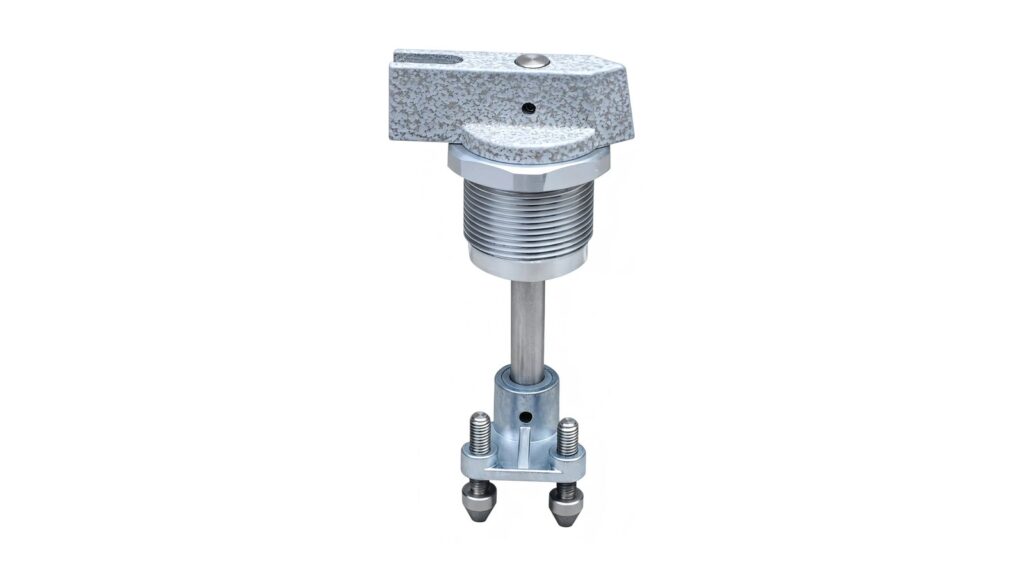
The public MMAIATEX About page states that ATEX, IECEx and CCC certification work is in progress. MMAIATEX Explosion-proof Technology (Zhejiang) Co., Ltd. does not present this article, a category page or a representative photograph as evidence of completed certification for any particular model or configuration.
Buyers should request current exact-model records and verify the certificate holder, product identity, issue, scope, marking, standards, conditions and instructions through the applicable official source before specification or purchase.
Safety and legal disclaimer
This article is general educational information reviewed on the date shown. It is not legal advice, a product-scope decision, a conformity assessment, a hazardous-area classification or authorization to place machinery on the EU market. The manufacturer, importer, integrator, employer, competent engineer, conformity-assessment body and relevant authority must determine the requirements for the actual product, site and transaction.
Request a documented 2027 review
Send the destination market, machine function, intended placing-on-market date, approved hazardous-area classification, product configuration and required document list. MMAIATEX can identify potentially relevant product information for assessment by the responsible buyer and compliance team.
Primary sources
- Current consolidated Regulation (EU) 2023/1230, 27 July 2026
- European Commission machinery overview
- Current consolidated ATEX Directive 2014/34/EU, 30 May 2026
- European Commission ATEX overview and January 2026 guidelines
- European Commission CE marking overview
- European Commission conformity-assessment guidance