
The current official references used here are IEC/IEEE 60079-30-1:2025 and IEC/IEEE 60079-30-2:2025, both Edition 2.0 published September 15, 2025 with stability dates of 2029, plus IEC 60079-0:2026, Edition 8.0 published June 16, 2026. The IECEx standards page identifies IEC/IEEE 60079-30-1 as an example used by its equipment scheme, but a standards list is not a product certificate.
1. What is explosion-proof trace heating?
It is electrical resistance trace heating applied where an explosive atmosphere can be present and qualified through the applicable Ex requirements. The term describes a system decision, not a property proved by an ordinary heater, an IP rating or marketing language. Start with the site's documented area classification and required EPL. The MMAIATEX guides to gas Zone 0, Zone 1 and Zone 2 and dust Zones 20, 21 and 22 provide related classification context.
2. Which electrical resistance heater forms are covered?
IEC/IEEE 60079-30-1:2025 covers factory-assembled or field-assembled units made in accordance with the manufacturer's instructions. Its public scope includes series trace heaters, parallel trace heaters, trace-heater pads and trace-heater panels. Do not assume these forms are interchangeable. A buyer should identify the exact construction, product code and assembly method, then match them to the certificate scope and instructions for the unit being supplied.
3. Does the 2025 standard cover every hazardous-area EPL?
No. Part 30-1 excludes equipment for EPL Ga, Da, Ma and Mb. Part 30-2 separately excludes applications requiring EPL Ga or Da. Those two scope statements should not be merged. A buyer must determine the required EPL from the real area and application, then verify the complete marking and current certificate for the exact system. The general EPL guide can help interpret Ga, Gb, Gc, Da, Db and Dc, but it does not select a trace-heating system.
4. What is the difference between Parts 30-1 and 30-2?
Part 30-1 specifies general and testing requirements for electrical resistance trace heaters. It also includes termination assemblies and control methods used with trace-heating systems. Part 30-2 gives application guidance for design, installation, maintenance and repair, including associated control and monitoring equipment. Buyers normally need evidence addressing both the certified equipment and its application. Part 30-2 does not cover induction heating, skin-effect heating, direct pipeline heating or stress-relieving applications.
5. Does a compliant trace heater make the complete system compliant?
No. The heater is only one part of the evidence chain. Terminations, power connections, splices where permitted, junctions, controls, monitoring, circuit protection, sensors and the field assembly can introduce separate conditions. Match every item and interface to the manufacturer's instructions and the exact certificate schedules. The MMAIATEX guide on reading Ex markings explains why a partial marking or familiar brand name cannot establish the complete protection scope.
6. What should buyers verify for terminations and connection assemblies?
Request the exact termination or connection-assembly identifier, its compatibility with the selected heater, its permitted assembly method and every condition stated in the controlled instructions and certificate. Part 30-1 expressly includes termination assemblies. Do not replace an approved part with a visually similar item or assume that a weatherproof connector is Ex suitable. Field work must follow the manufacturer's instructions and the project's controlled installation procedure.
7. How should control and monitoring equipment be qualified?
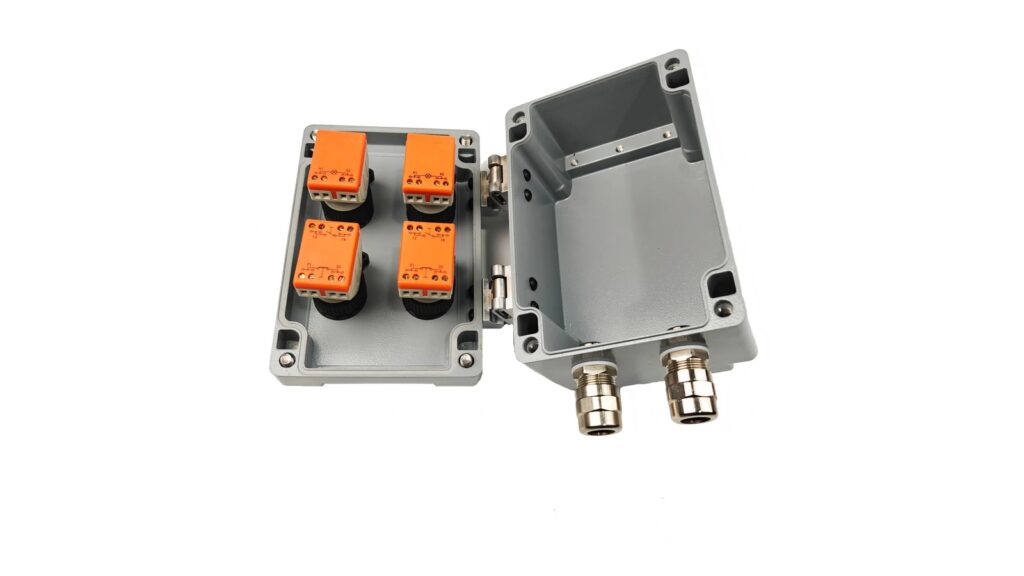
Treat control and monitoring as functional parts of the trace-heating application, not as decorative accessories. Part 30-1 includes control methods, and Part 30-2 includes associated control and monitoring equipment in its application guidance. Verify each device's function, location, electrical interface, marking and certificate requirements for where it is installed. A photograph of representative MMAIATEX control hardware is not a photograph of a trace heater and does not prove that the hardware is approved for a specific trace-heating system.
8. What temperature evidence should a buyer request?
Request the full Ex marking, temperature classification or maximum surface-temperature information as applicable, permitted ambient range, manufacturer instructions, certificate schedules and the project temperature assessment. The design must consider the actual process, surrounding conditions, thermal insulation and control strategy. Do not select from a generic watt-density, spacing, set-point or circuit-length value. Those values depend on the identified product and documented design conditions and are not supplied by the public IEC summaries.
9. What project information is needed before selection?
Provide the area classification, required EPL, gas or dust information, ambient and process conditions, equipment to be heated, thermal-insulation details, supply characteristics, routing, operating purpose and destination rules. The responsible designer then uses controlled product data and instructions to develop the circuit and temperature assessment. The IEC 60079-14:2024 buyer checklist gives broader installation-document context, but it does not replace the trace-heating design.
10. What system-level evidence should procurement collect?
Build one controlled file that connects the real installation to the supplied system:
- Area-classification record and required EPL.
- Exact heater type, product code and complete Ex marking.
- Current product certificate, schedules and applicable conditions.
- Identified termination, connection and junction components.
- Identified control, monitoring, sensor and protective devices.
- Design basis, circuit schedule and temperature assessment.
- Current assembly, installation, commissioning and maintenance instructions.
- Inspection, test, change-control and maintenance records.
Use the official record and exact documents rather than a cropped certificate image. The certificate and ATEX document verification guide explains the matching process.
11. What is MMAIATEX's current certification status?
The public MMAIATEX About page states that ATEX, IECEx and CCC certification work is in progress. MMAIATEX Explosion-proof Technology (Zhejiang) Co., Ltd. does not claim through this article that it offers a certified trace heater or completed trace-heating system. A control product, photograph, standard reference, IP rating or brand statement is not proof of product certification. Verify the exact model, manufacturer, marking, current certificate status, schedules and installation documents before selection.
12. Who approves the final installation and maintenance plan?
The responsible owner, designer, installer and legal duty holders approve the application under current standards, local law and controlled project documents. Part 30-2 provides guidance for design, installation, maintenance and repair, but this article does not perform those tasks or authorize work. Competent personnel must verify the installed configuration, testing, inspection, operation and changes. The IEC 60079-17 inspection-grades guide gives related inspection context.
Safety and legal disclaimer
This guide is general procurement and safety education. It does not classify an area, calculate heat loss, select settings, certify equipment, approve an installation or replace manufacturer instructions, current certificates, engineering calculations, national requirements or competent-person review.
Request an evidence-led trace-heating equipment review
Send the destination market, area classification, required EPL, atmosphere information, process and ambient conditions, installation concept and document list. MMAIATEX can organize available information for review by the responsible engineering, EHS and compliance teams.