
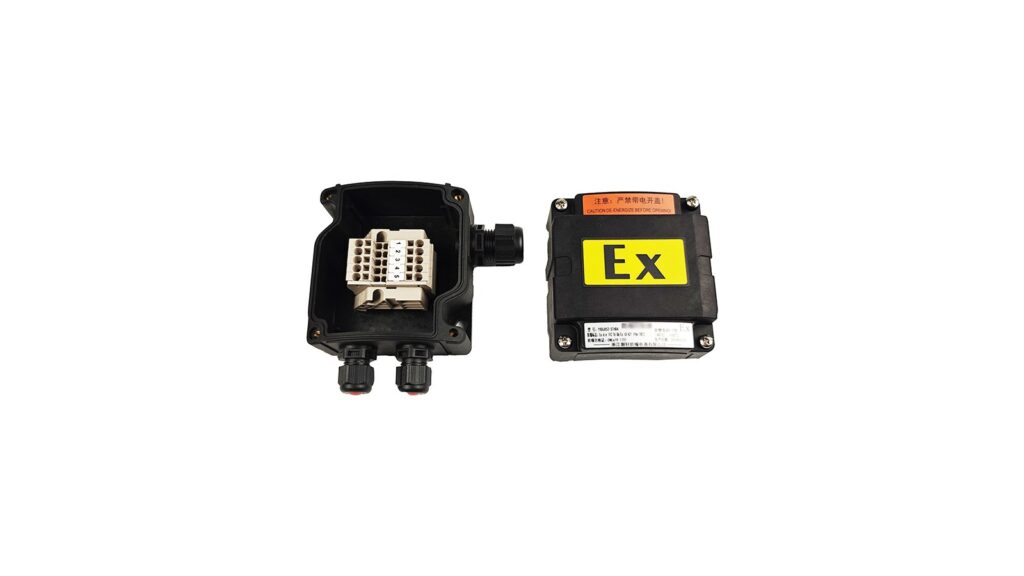
What IP66 actually tells a buyer
IEC 60529 classifies the degrees of protection provided by electrical enclosures. The IP code addresses access to hazardous parts and ingress by solid foreign objects and water.
For IP66, the two digits communicate two enclosure test categories:
| Marking element | What it indicates | What it does not indicate |
|---|---|---|
| First digit 6 | The enclosure is dust-tight under the applicable IP test | Dust group, EPL, ATEX category or maximum surface temperature |
| Second digit 6 | Protection against powerful water jets under the applicable IP test | Flameproof construction, increased safety, intrinsic safety or another Ex protection concept |
| Complete IP66 code | A defined level of enclosure ingress protection | A current IECEx certificate, ATEX conformity route or hazardous-area approval |
The exact test conditions and permitted installation details belong in the product's technical documentation. An IP rating can be important for reliability and environmental protection, but it answers a different question from Ex conformity.
What explosion protection tells a buyer
IEC 60079-0:2026 provides general requirements for the construction, testing and marking of Ex Equipment and Ex Components. Other parts of the IEC 60079 series cover particular protection concepts and installation requirements.
A hazardous-area assessment may need information such as:
- Equipment group and gas or dust subgroup
- Equipment Protection Level or ATEX equipment category
- Protection concept, such as flameproof enclosure "d" or increased safety "e"
- Temperature class for gas or maximum surface temperature for dust
- Ambient temperature range
- Certificate number, suffix, schedule and conditions of use
- Exact model, configuration and legal manufacturer
None of these fields is encoded by IP66.
IP66 and Ex protection are complementary
A product can carry both an Ex marking and an IP rating when both are applicable and supported by its current documentation. The Ex information addresses ignition protection for the specified explosive atmosphere. The IP code addresses enclosure ingress protection.
One does not replace the other:
| Buyer question | Evidence to review |
|---|---|
| Will the enclosure resist the specified dust and water exposure? | IP rating, test basis, installation instructions and environmental limits |
| Is the exact product assessed for the classified explosive atmosphere? | Complete Ex marking, current certificate or conformity documents, schedule and project rules |
| Will the equipment remain suitable after cable entries and accessories are installed? | Certified configuration, entry devices, instructions, sealing, mounting and inspection records |
| Is the product suitable at the site's temperature? | Ambient range, T-class or maximum surface temperature, load and certificate conditions |
Is an IP66 enclosure suitable for Zone 1 or Zone 21?
Not from the IP66 marking alone. Zone suitability depends on the complete Ex assessment and the exact product evidence.
For Zone 1, a buyer may need a gas marking and an appropriate EPL or ATEX category, plus the correct protection concept, gas group, temperature class and ambient range. For Zone 21, the buyer may need dust-specific marking, dust group, EPL or category and maximum surface temperature. The approved area-classification document determines the selection inputs.
The Zone 20, Zone 21 and Zone 22 guide explains the frequency and duration basis for dust Zones.
Does dust-tight mean dust-explosion protected?
No. A dust-tight enclosure limits ingress under the relevant IP test. Dust-explosion protection also considers ignition hazards, surface temperature, electrostatic risks, joints, entries, materials, marking and the applicable protection concept.
This distinction is especially important when a product page uses phrases such as waterproof, dustproof, weatherproof, anti-corrosion or three-proof. Those descriptions can be useful environmental information, but they do not create an Ex certificate.
Can all Ex equipment be assumed to be IP66?
No. Do not set a universal IP66 requirement from the word "Ex." The required ingress protection depends on the protection concept, equipment standard, installation conditions, environment and project specification. Review the exact product marking, certificate and instructions.
Conversely, do not reject an application solely because a broad product category does not display IP66. Ask for the current data for the exact model and configuration.
Why entries and modifications matter
An enclosure rating is assessed as a construction. Incorrect cable glands, stopping plugs, adapters, seals, covers, fasteners, drilling or field modifications can undermine ingress protection and may also affect the certified Ex configuration.
IEC 60079-14:2024 covers electrical-system design, equipment selection, installation and initial inspection for Ex installations, including documentation and personnel competency. Selection therefore continues beyond reading the product label.
For cable-entry questions, use the Explosion-Proof Cable Gland Selection FAQ. For enclosure selection, use the Zone 1 Junction Box Checklist.
A practical verification workflow
- Obtain the approved area classification and environmental specification.
- Record the required Zone, EPL or ATEX category, group, temperature and ambient range.
- Record the required IP rating and corrosion or impact conditions separately.
- Identify the exact model, suffix and configuration.
- Compare the nameplate with the current data sheet and instructions.
- Check the current certificate or conformity documents and their scope.
- Confirm that entries, accessories and mounting preserve the assessed configuration.
- Have competent personnel complete installation and initial inspection.
Our Ex marking guide explains the fields on a nameplate. The document-verification guide explains how to match the product identity with official records.
Current MMAIATEX certification status
The public MMAIATEX About page states that ATEX, IECEx and CCC certification work is in progress. Do not use a visible IP rating, Ex-related product name or representative photograph as proof of a certificate for an exact model.
Request current model-specific documents and verify their status, scope, conditions and product identity before approval.
Safety disclaimer
This article is general educational information. It does not certify a product or approve an installation. Hazardous-area selection, installation, inspection and maintenance must be completed by competent personnel using current standards, applicable law, project documents and exact manufacturer evidence.
Request an IP and Ex document review
Send the destination country, approved area classification, environmental IP requirement, gas or dust group, temperature requirement, ambient range, electrical duty, entry details and exact model. MMAIATEX can then identify the current product information available for review.