
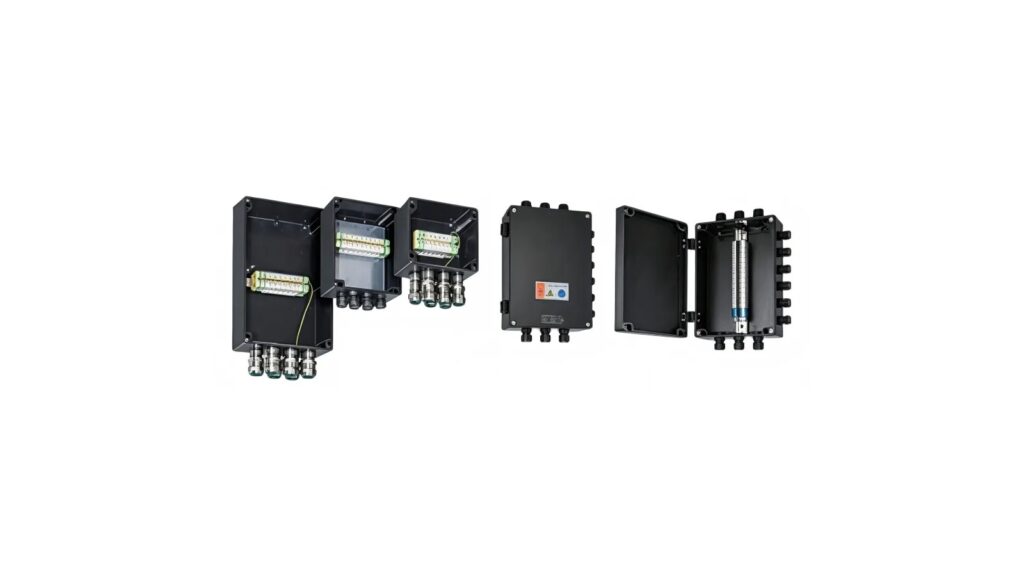
1. Can I drill an explosion-proof enclosure on site?
Not by default. A field technician may be physically able to make a hole, but mechanical possibility is not evidence that the final equipment remains covered by its explosion-protection documents.
Before any drilling, identify the exact legal manufacturer, model, protection technique, certificate, schedule, drawing and permitted entry arrangement. Obtain written confirmation through the responsible manufacturer, certification or project process as applicable.
If that evidence is unavailable, the safe procurement answer is to stop and order the required configuration before installation.
2. Why is drilling especially sensitive for an Ex db enclosure?
Ex db protection depends on a flameproof enclosure assessed under IEC 60079-1. Enclosure strength, flamepaths, joints, threaded holes, entries and fasteners are controlled parts of the design.
A new or enlarged hole can affect wall thickness, spacing, pressure integrity, thread engagement or the route through which hot gases could pass. Drilling near a flamepath or cover joint can be particularly consequential.
There is no universal "safe drilling area" that applies to every Ex db enclosure. Use the exact certified design and controlled instructions.
3. Is an Ex eb enclosure easier to modify?
Do not treat Ex eb as freely modifiable. Increased safety depends on measures that can include conductor security, terminals, creepage and clearance distances, temperature rise, power dissipation, certified components, seals and cable entries.
An added operator, terminal, gland or internal device can change spacing, heat and the assessed configuration. The enclosure may also rely on a stated IP rating or environmental seal.
The guide Ex db vs Ex eb explains the different protection principles. Different does not mean uncontrolled.
4. Can I add another cable gland?
Only when the exact configuration and documentation allow it. Check:
- Permitted entry locations and quantity
- Thread type, diameter and engagement
- Cable construction, armour and outside diameter
- Gland protection technique and certificate
- Gas or dust group and temperature conditions
- Required sealing, IP rating and corrosion resistance
- Spacing from other entries, joints and internal components
- Need for adapters, reducers or stopping plugs
The cable gland selection FAQ explains why a matching thread is only one part of the review.
5. Can an existing entry be enlarged or re-threaded?
Do not enlarge or re-thread an entry unless the controlled design specifically permits the change. Removing material can change thread form, engagement, wall thickness, spacing and enclosure integrity.
An adapter or reducer is not an automatic workaround. It must be suitable for the enclosure protection technique, entry, cable or stopping function, atmosphere, environmental duty and exact certificate conditions.
If the ordered entry is wrong, compare factory replacement, an approved configured enclosure or a controlled service-facility process before considering machining.
6. Can I add mounting holes?
It depends on what the hole penetrates and what the approved design permits. A mounting feature outside the protected volume may be treated differently from a hole through the enclosure wall, but its location can still affect wall integrity, cover operation, environmental sealing or the certified drawing.
Do not rely on a generic blank area or a similar model. Ask for the exact mounting drawing and permitted method. External brackets or factory-prepared mounting features are often easier to control than unreviewed site drilling.
7. Can cover bolts or fasteners be replaced with similar hardware?
Not on appearance alone. Fastener material, strength grade, diameter, thread, length, head form, quantity and tightening instructions can be part of the assessed enclosure construction.
For Ex db equipment, incorrect fasteners can affect the ability of the enclosure and its joints to perform as designed. For other protection techniques, fasteners can still affect sealing, impact resistance and access control.
Use the exact manufacturer instructions and approved replacement specification. Keep the replacement record with the equipment dossier.
8. Can a damaged enclosure be welded or repaired?
Repair is not the same as ordinary cosmetic maintenance. IEC 60079-19:2025 applies to service facilities and covers factors related to overhaul, repair and reclamation of Ex Equipment for explosive atmospheres.
IECEx operates a Certified Service Facilities Scheme for organizations that provide relevant Ex equipment services within a defined assessed scope. A facility's competence can be limited to certain protection techniques or equipment.
Welding can affect material properties, strength, distortion and flameproof integrity. Some work can require measurement, controlled procedures, testing, documentation or rejection of the enclosure. Do not authorize welding from a photograph or generic workshop capability.
9. Does a modification automatically create a new certificate?
No single outcome applies to every change. The effect depends on the original conformity route, certificate, protection technique, design ownership, scope of change and applicable process.
A manufacturer of IECEx certified equipment is required to notify the issuing Ex Certification Body when the certified design is changed. The ExCB then determines whether the certificate needs to be updated. The IECEx certified-equipment FAQ also identifies the online certificate as the controlled version.
For ATEX products, Directive 2014/34/EU requires instructions to contain information needed for safe putting into service, use, assembly, dismantling, maintenance and emergency repair. Those instructions and the applicable conformity records must be checked before a buyer treats any change as permitted.
A proposed change may be already covered, may require a controlled variant, may require manufacturer and certification-body review, may fall within a qualified repair process, or may be unacceptable. A buyer should not decide the certificate effect independently.
Ask for a written determination that identifies the exact model, proposed change, responsible organization, document revision and final marking or record requirements.
10. What should I specify before ordering a customized enclosure?
Define the final configuration before manufacturing wherever possible:
- Destination country and required conformity route
- Approved Zone, EPL or category, and gas or dust group
- Temperature requirement and site ambient range
- Enclosure protection technique and environmental duty
- Cable type, diameter, armour, entry thread, location and quantity
- Operators, windows, indicators, switches and external accessories
- Terminals, internal components, wiring and maximum dissipation
- Mounting, orientation, drainage, vibration and impact conditions
- Exact certificates, schedules, drawings, instructions and declarations required
- Inspection, tagging, handover and future spare-part records
The IEC 60079-14:2024 buyer checklist places these inputs inside the wider installation-selection process.
A modification decision record
Before physical work begins, retain a short controlled record:
| Record field | Minimum information |
|---|---|
| Equipment identity | Legal manufacturer, model, serial number and existing marking |
| Existing evidence | Certificate number, issue, schedule, drawings and instructions |
| Proposed change | Exact hole, entry, hardware, component or repair with dimensions and location |
| Technical review | Effect on protection technique, temperature, IP, strength and other limits |
| Responsible decision | Manufacturer, certification body, qualified service facility or project authority as applicable |
| Final evidence | Approved drawing, revised documents, marking, test or service record and inspection result |
This record cannot make an unapproved change acceptable. Its purpose is to prevent informal work from bypassing the organizations responsible for the equipment design and installation.
Common enclosure-change mistakes
- Treating a spare blank wall as automatic permission to drill
- Copying the hole pattern from a similar model
- Choosing a gland by thread size alone
- Enlarging an entry because an adapter appears inconvenient
- Replacing flameproof cover bolts with ordinary hardware
- Adding internal devices without checking heat and spacing
- Welding a crack without an Ex-specific repair review
- Assuming a good IP seal preserves every Ex protection requirement
- Accepting a workshop statement without scope, records or exact-equipment identification
- Treating a product photograph or Ex logo as change authorization
Current MMAIATEX certification status
The public MMAIATEX About page states that ATEX, IECEx and CCC certification work is in progress. A category listing, image or product name does not prove that a proposed customized configuration has a completed certificate.
Request current documents for the exact legal manufacturer, model, suffix and configuration. Verify whether the proposed entries, components and options are included before approval or physical work.
Safety disclaimer
This FAQ provides general product-research information. It does not authorize drilling, machining, welding, repair, component substitution or certificate changes. Ex equipment modification and repair decisions must be made by the responsible competent organizations using the exact equipment records, current standards, manufacturer instructions and applicable conformity process.
Request a factory-defined enclosure configuration
Send MMAIATEX the approved classification, protection requirement, cable and entry schedule, internal components, operators, mounting, environment and document list before ordering. The team can then identify potentially relevant enclosure information for the responsible engineer to assess without relying on uncontrolled site changes.
Primary sources
- IEC 60079-1:2014, equipment protection by flameproof enclosures d
- IEC 60079-7:2015, equipment protection by increased safety e
- IEC 60079-19:2025, equipment repair, overhaul and reclamation
- IEC 60079-17:2023, electrical installation inspection and maintenance
- IECEx certified-equipment FAQ on design changes and controlled certificates
- IECEx Certified Service Facilities Scheme overview
- IECEx operational requirements for Ex service facilities
- ATEX Directive 2014/34/EU