
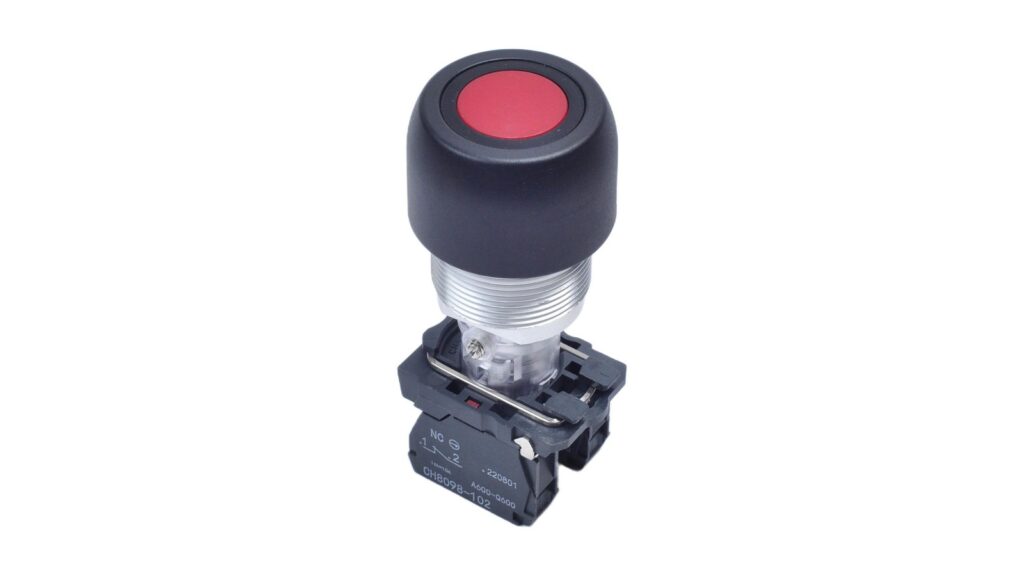
Image note: The representative photograph shows a red push-button and contact block, not a force or travel test. Visible electrical labels establish no mechanical result or Ex approval. Verify exact model marking, certificate scope and current documentation.
Push-button operating force and travel: compare like fields
These are editorial buyer questions, not records of customer enquiries. The following comparison-status table is an original purchasing aid, not a standard-mandated test form.
| What the two offers show | Comparison status | Clarification needed |
|---|---|---|
| Same quantity and unit, different configurations | Configuration unresolved | Which complete combination does each entry cover? |
| Different quantity labels | Not a like-for-like comparison | Which requested characteristic is being answered? |
| Same label, missing limit qualifier | Interpretation incomplete | Is it a minimum, maximum, range or typical value? |
| Matching fields with supporting references | Ready for technical review | Does the evidence address the project brief? |
1. What does an operating-force label describe?
OMRON's push-button terminology defines operating force, OF, by movement from the free position to the operating position. Preserve the supplier's exact label when recording a figure. A quotation headed simply "button force" does not tell the buyer which characteristic was supplied. Ask for the identified row in the manufacturer's document before assigning it a meaning.
2. Can OF and TTF be compared as the same value?
No. Total travel force, TTF, refers to force or torque at the operating-limit position, rather than the OF characteristic. Keep the two labels in separate fields. If a project enquiry asks for OF and a reply provides only TTF, record that the requested field remains unanswered. Do not substitute one merely because it is the only mechanical figure on the page.
3. What does a releasing-force entry add?
Releasing force, RF, concerns the return from the operating-limit position toward the returned position. It is not another name for the pressing characteristic. For purchasing purposes, preserve the return-related entry when it is supplied and ask which action configuration it describes. An absent entry should remain an explicit information gap; it does not demonstrate either adequate return behavior or a fault.
4. Why must N and N m stay separate?
They identify force and torque respectively. The OMRON A22 specification page, updated November 4, 2025, separates push-button and rotary-selector operating-characteristic columns. A spreadsheet that drops units could therefore combine unlike quantities. Do not invent a lever arm or conversion to make the figures comparable. If the offer actually concerns a rotary device, use the separate selector-switch buyer questions to clarify its identity first.
5. How do pretravel, overtravel and total travel differ?
Pretravel, PT, runs from the free position to contact operation; overtravel, OT, continues from operation to the operating limit; total travel, TT, covers the complete movement to that limit. Use those distinctions to read the document, not to set a machine stop or prescribe an allowed stroke. A generic "travel" entry needs its label clarified before it can answer a specific enquiry.
6. Does a maximum or minimum mean a typical value?
No. Keep the qualifier attached to the number exactly as supplied. Do not turn a maximum into an expected result, or rank a maximum from one offer against an unqualified value from another. If the project brief requires a particular form of evidence, ask whether the supplied statement addresses that brief. The purchasing comparison should reveal differing claim types instead of silently normalising them.
7. Can a head-only figure describe the complete assembly?
Not without documentation connecting it to the offered combination. Ask whether the record covers the operating head alone or the identified head, contact blocks and other specified parts together. The listed push-button modules and operating heads help identify the enquiry family, but a listing is not assembly-specific mechanical evidence. For broader configuration selection, consult the panel-mount push-button FAQs.
8. Which action and reset identity belongs beside the figures?
Record the exact action variant and ordering code to which the document applies. A common family name may cover alternatives, so avoid copying a neighboring column into the comparison. If the quote changes from one action variant to another, ask which mechanical entries remain applicable. This is about preserving document identity, not recommending a reset mechanism or approving a machine safety function.
9. Which conditions should accompany the quoted characteristic?
Retain any conditions, reference notes and revision information that the manufacturer attaches to that specific mechanical entry. If they are absent or unclear, ask for clarification rather than borrowing conditions from another table. Electrical test conditions on the same page are not automatically mechanical test conditions. Similarly, the machine-actuation questions in the limit-switch FAQs cannot be copied into a push-button enquiry as a universal procedure.
10. Does lower stated force prove better usability?
No. First establish that both statements describe the same quantity and configuration. Then give the relevant evidence to the person responsible for the project's human-interface requirements. A numerical ranking alone cannot answer that person's acceptance question. State the intended use context in the enquiry without claiming that a catalogue figure validates accessibility, protective-glove use, an emergency function or a complete workstation design.
11. Can this comparison authorise replacement or Ex suitability?
No. IEC 60947-5-1:2024 addresses electromechanical control-circuit devices; IEC 60079-0:2026 has a separate Ex construction, testing and marking scope. Matching mechanical fields is not evidence of interchangeability or completed-equipment approval. An alternative part requires the applicable product and assembly review, not a conclusion drawn from similar appearance or a more appealing force figure.
12. What makes two offers ready for a useful review?
Keep the exact characteristic, unit, qualifier, complete configuration and supporting document together for each offer. Identify unresolved differences explicitly and separate them from fields that already match. Ask the responsible reviewer to decide whether the available evidence addresses the project requirement. This produces a bounded clarification task without inventing a missing value, assuming a performance limit or promising that a supplier can offer the required combination.
Certification status
As reviewed on October 21, 2026, the MMAIATEX About page describes ATEX, IECEx and CCC certification as in progress. This is an attributed company statement, not independent certificate verification. MMAIATEX Explosion-proof Technology (Zhejiang) Co., Ltd. is the legal entity identified here. No operating-force value, travel result or availability is claimed for a listed product.
Safety and legal disclaimer
These answers support purchasing clarification, not force testing, adjustment, wiring, installation or replacement approval. Manufacturer examples explain how to read information; their model-specific values are not transferred to MMAIATEX products. Qualified personnel must review the exact equipment and applicable requirements. Do not alter springs, contacts or operating mechanisms using this article.
Contact MMAIATEX
For a push-button enquiry, send the catalogue reference, proposed head/contact combination and the specific mechanical labels or document fields requiring clarification.