ATEX Group I vs Group II: keep the category with the group
The European Commission's ATEX page currently links its Sixth Edition Guidelines, issued in January 2026. The guidelines, Article 2 and Annex I discussion, provide the basis for this short distinction.
| ATEX equipment group | Categories within that group | Purchasing question |
|---|---|---|
| I | M1 and M2 | Does the offered scope match the documented mining application? |
| II | 1, 2 and 3 | Does the offered scope match the documented non-mining application? |
For Group I, M1 concerns a very high protection level with equipment remaining functional when an explosive atmosphere is present; M2 concerns a high protection level and equipment intended to be de-energised in that event. These are category distinctions, not operating instructions.
Why a surface location needs a precise description
Avoid reducing the enquiry to outdoor, surface or mining industry. Those labels may be useful commercially, but they leave the reviewer to guess which part of the project the equipment will serve. Start instead with the actual installation reference and the responsible engineer's description of its intended use.
For example, a purchasing department may buy equipment for several areas managed by the same mining company. The company name alone does not tell the supplier which equipment requirement applies to each area. Conversely, a location described as a surface installation should not be accepted as a complete explanation of the requested group. This is a hypothetical procurement example, not a MMAIATEX project announcement.
Ask the project owner to resolve the application description before requesting interchangeable alternatives. Procurement can make the uncertainty visible; it should not invent the group assignment to complete a quotation form.
Separate the site requirement from the offered product
Keep two records side by side. The first is the approved project requirement. The second is the manufacturer's description of the exact item offered. Do not overwrite the first record with a supplier's standard catalogue text, and do not assume the supplier has reviewed information that was never included in the enquiry.
Our guide to reading Ex markings helps organize the broader nameplate information. This article addresses the equipment-group question specifically. Record the complete marking rather than copying one familiar portion into a spreadsheet headed certification.
An enclosure material, similar appearance or shared product-family name is not enough to resolve a scope difference. If two offers use different descriptions, ask each supplier to identify the exact model, variant and documentation supporting its offer. Keep the written answer with the quotation comparison.
Use a structured enquiry without turning it into approval
The following checklist is an original document-review aid. It does not assign a group or category and is not a substitute for competent engineering or legal review.
- Identify the destination, project area and intended function of the equipment.
- Attach the approved application description instead of relying on an industry label.
- Record the required group and category exactly as supplied by the responsible reviewer.
- Request the offered manufacturer's identity, model and configuration references.
- Obtain the applicable instructions and the specific conformity documents being claimed.
- Identify differences between the requirement, quotation and supporting documents.
- Assign each unresolved difference to a named reviewer before purchase acceptance.
Include document revisions in this record. If the project description changes while quotations are being compared, send the change to every affected supplier. A response to the earlier requirement should not silently become evidence for the revised one.
Keep classification and certification questions distinct
HSE's explosive-atmosphere guidance explains, in its GB workplace context, that zoning considers the likelihood and persistence of an explosive atmosphere. A supplier's product document and a site's classification record therefore answer different questions. Do not ask a product photograph to establish either one.
For the wider separation of product-supply and workplace responsibilities, read the ATEX 114 and ATEX 153 guide. It is background reading, not a method for transferring a familiar workplace classification to a mining application.
Similarly, an authentic document is only useful when it describes the offered item and relevant scope. The certificate-verification guide covers that evidence check. Avoid treating possession of any certificate as the answer to a group mismatch.
Make exceptions visible in the quotation comparison
Use a separate column for unresolved scope differences. A statement such as supplier to confirm is useful only if it includes the question, responsible person and required document. Otherwise it can disappear when a quotation is converted into an order.
When a supplier proposes a different item, ask for a clear account of what changed. Keep the original offer, revised offer and technical response linked. If the answer remains incomplete, mark technical acceptance as open rather than presenting the cheaper or faster offer as an approved equivalent.
Do not solve the problem by requesting a different label on unchanged equipment. A purchasing description should follow the applicable evidence, not replace it. This is especially important when several similar items are being ordered for different areas and their document packages could be mixed during handover.
Current MMAIATEX certification status
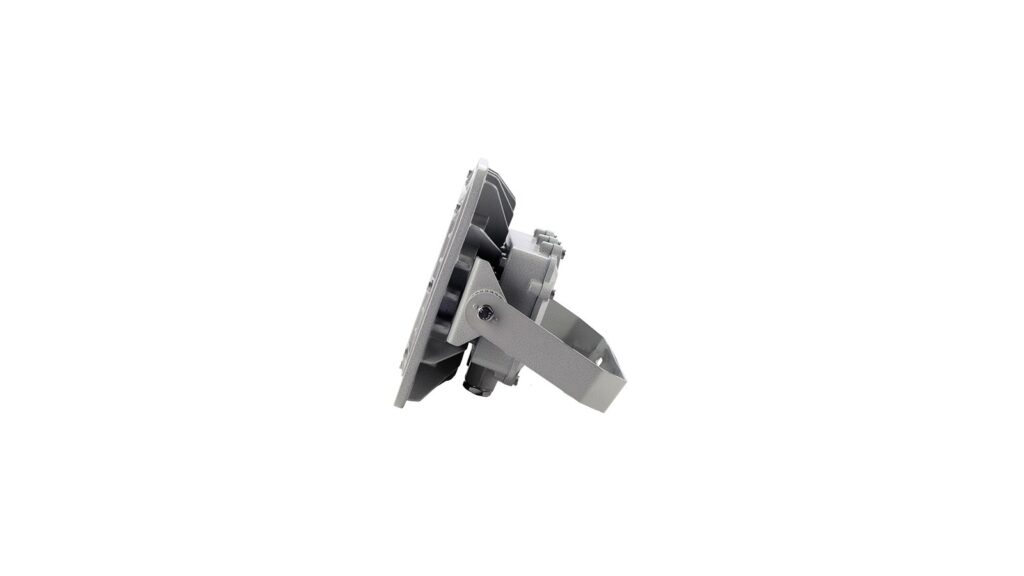
MMAIATEX is the public brand of MMAIATEX Explosion-proof Technology (Zhejiang) Co., Ltd. The About page currently describes ATEX, IECEx and CCC certification as in progress. This guide does not announce certified Group I products, mining approval or a mining-equipment range. Representative website photographs do not establish group, category or model suitability.
Safety and legal disclaimer
The Commission guidance explains the Directive but is not binding legislation. This article is general purchasing information, not a legal opinion, mine-safety assessment or equipment selection. Check applicable national requirements and obtain competent review of the actual product and application. Do not energise, relocate or relabel equipment on the basis of this guide.
Contact MMAIATEX about an equipment documentation question
For a MMAIATEX electrical-product enquiry, share the destination, intended application and exact document question. Ask whether suitable evidence is available without assuming that this article confirms a product's approval.