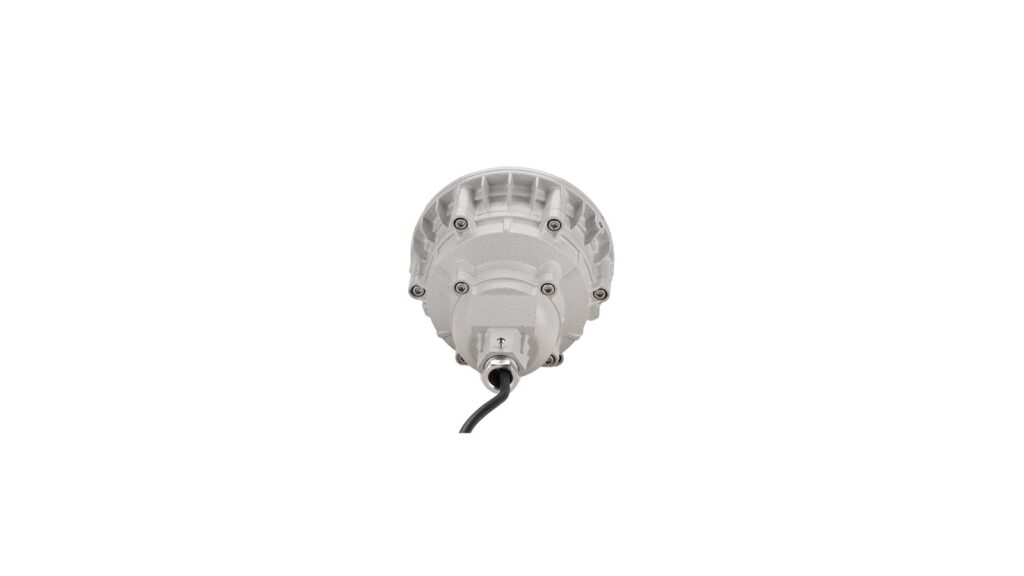
Image note: The representative website product photograph does not show a marine installation, establish shipboard approval or prove suitability for an offshore asset. Verify exact model marking, certificate scope and current documentation.
ATEX marine and offshore scope starts with the asset
Article 1(2)(e) of Directive 2014/34/EU, consolidated May 30, 2026, provides the vessel and mobile-unit exclusion. Section 37 of the Commission's sixth-edition ATEX guidelines discusses it. Separately, the Commission's ATEX overview explicitly includes equipment used on fixed offshore platforms among its examples. These sources do not make a catalogue label such as marine grade a legal classification.
A useful enquiry therefore names the asset before asking for an approval. Ask the project owner to provide its documented description rather than letting a salesperson infer it from a photograph or delivery address. A port destination may simply be a logistics location; it does not identify where equipment will ultimately operate.
This article helps organise that initial purchasing question. It does not classify an actual vessel or installation, determine maritime jurisdiction or specify the approval route for an individual product.
Four different descriptions need different follow-up questions
The table below is an editorial clarification aid. It does not establish that a particular item falls within or outside legislation.
| Description in the enquiry | Clarification to obtain | Shortcut to avoid |
|---|---|---|
| Equipment for a seagoing vessel | Identified vessel and intended onboard use | Treating ATEX exclusion as permission to omit other safety requirements |
| Equipment for a mobile offshore unit | Documented unit identity and application | Replacing the asset description with offshore only |
| Equipment for a fixed offshore platform | Applicable product and project requirements | Extending the mobile-unit exclusion to every offshore asset |
| Equipment for a coastal or port facility | Actual operating location and responsible review | Assuming a coastal address establishes shipboard use |
If a tender uses several descriptions, retain them and ask the owner to resolve the difference. Do not choose whichever interpretation makes an existing document easiest to accept. The purchasing record should show the answer and its basis, not conceal uncertainty behind a broad industry label.
Separate legal scope from environmental suitability
An equipment enquiry can contain both a legal-scope question and an exposure question. Keep them separate. One asks which requirements govern the offered product and intended use. The other asks what conditions the proposed construction must address in service.
For example, the phrase marine enclosure might refer to a marketing description, a material claim or an application already assessed elsewhere. Ask which meaning is intended and which document supports it. Do not convert the phrase into a certificate, a corrosion rating or an approval for the complete equipment arrangement.
Use the adverse service conditions guide for the broader environmental brief. When an actual corrosion-test report is supplied, the salt mist report guide addresses a different evidence question. Neither linked article determines the asset's legal status, and this article does not prescribe environmental tests or acceptance limits.
Build a short scope record before comparing offers
For an enquiry review, consider keeping the following information together:
- The project owner's asset description and the document in which it appears.
- The equipment's intended location and use, distinguished from its shipping destination.
- The requirements or approval references supplied by the responsible project reviewer.
- The exact offered model, configuration and documents claimed to support that offer.
- Any unresolved difference, with a named party responsible for clarification.
This is a suggested purchasing record, not a mandatory legal form. It helps prevent a common document-control problem: a supplier answering one interpretation of the project while the buyer assumes another.
If the technical brief is incomplete, mark the comparison preliminary. A received certificate can be logged as received without treating it as the final answer to a scope question that has not been resolved. Preserve the original brief and the later clarification so colleagues can follow how the enquiry changed.
Do not transfer acceptance between applications
A supplier may provide evidence from an earlier delivery. Ask what exact product and use that evidence concerns. A prior order for a different vessel, platform or location is background information, not an automatic acceptance record for the new enquiry.
Likewise, a model-family name should not hide different configurations. Put the full offered reference beside the supporting document reference and identify any difference for the responsible reviewer. If the supplier changes an option during quotation, confirm whether the earlier explanation still describes the revised offer.
The IECEx and ATEX document-verification guide offers a separate route for checking identity and evidence. Keep that work distinct from deciding which requirements apply. An authentic document and a relevant document are related questions, but they are not the same question.
An exclusion is not a complete approval route
Do not turn a conclusion about one directive into a claim that no other rules apply. Ask the responsible project parties to identify the applicable maritime, national and contractual requirements for the actual equipment and use. This article does not state which flag-state, class, marine-equipment or other approval is required in a particular case.
Avoid the opposite shortcut too: asking for an ATEX certificate does not, by itself, establish that the supplied item meets every requirement for an offshore or shipboard project. The purchasing objective is an explained match between the defined application, the requirements and the offered evidence.
Primary sources and reading limits
The Commission currently links its January 2026 sixth-edition guidelines. They are explanatory material, while binding requirements must be considered through the applicable legislation and national implementation. This guide uses the specific exclusion and the Commission's fixed-platform example; it does not extend them into a universal maritime approval rule. The record and comparison questions above are editorial suggestions.
Current MMAIATEX certification status
MMAIATEX is the public brand of MMAIATEX Explosion-proof Technology (Zhejiang) Co., Ltd. On the review date, its About page describes ATEX, IECEx and CCC certification as in progress. That is an attributed website statement, not independent verification of a product certificate. This article announces no marine approval, offshore installation, customer project or model-specific certification.
Safety and legal disclaimer
This is general purchasing information, not legal advice, an asset classification, engineering design or authorisation to install equipment. Competent responsible parties must assess the actual application and current documents. Do not infer suitability from a photograph, material description or this article's general scope comparison.
Contact MMAIATEX
Provide the documented asset description, intended equipment use and the specific evidence question. Separate project requirements from assumptions so the enquiry does not imply an unverified approval or supply capability.