
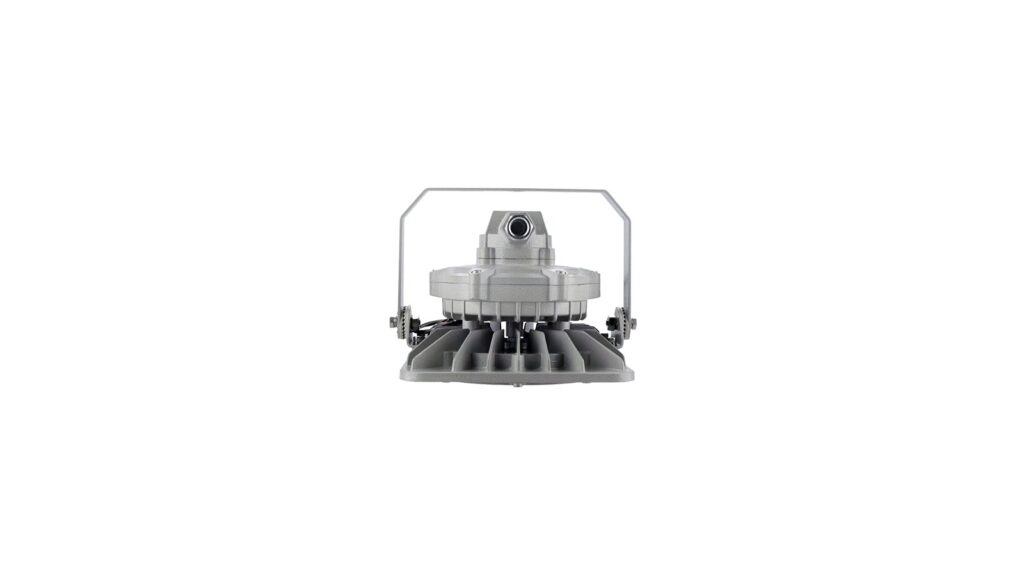
Image note: The photograph is representative product imagery, not a humidity test or evidence of condensation resistance. Verify exact model marking, certificate scope and current documentation.
Dew point vs relative humidity: two different fields
Dew point is the temperature at which air would reach saturation when cooled without changing its pressure or water-vapour content. Relative humidity expresses the existing moisture relative to saturation at the current temperature, as a percentage. These definitions follow the US National Weather Service's dew-point glossary and relative-humidity glossary.
Relative humidity therefore depends on temperature as well as moisture. A percentage copied without its corresponding air temperature is an incomplete environmental description. Dew point is not another name for the equipment's ambient-temperature rating, nor is it a gas temperature class.
This article concerns the quality of information passed from a buyer to the responsible engineer. It does not provide a condensation calculation, a protective-heater selection or an approved environmental limit.
Build a comparable environmental record
When two suppliers receive different environmental assumptions, their replies may look comparable while addressing different conditions. Use the same project record for both. The following fields are an editorial enquiry checklist, not a mandatory test schedule from a standard.
| Field | What to preserve | What the field does not establish |
|---|---|---|
| Air temperature | Units, location and time or service condition | The temperature of every nearby surface |
| Relative humidity | Percentage with the matching air temperature | A complete moisture description by itself |
| Dew point | Temperature units, source and associated conditions | An equipment certification or operating limit |
| Observation context | Inside or outside, exposure, operating state and sensor location | Conditions at an unmeasured location |
| Product boundary | Exact model, configuration and controlled environmental limits | Permission to extend those limits |
Do not combine the highest humidity from one observation with the lowest temperature from another and present the pair as a measured event. If a design envelope combines separate extremes, label it as a project assumption and identify the person responsible for validating it.
Keep missing information visible. A field marked not measured is more useful than a plausible value with no traceable origin.
Why air and surface conditions should not be confused
The National Weather Service's temperature explanation connects dew point with condensation and illustrates moisture appearing on a cold surface. The purchasing implication is limited: an air reading alone should not be treated as proof of every surface's condition. The project reviewer needs the relevant surface and operating context before judging condensation concerns.
For an enclosure enquiry, identify whether a statement describes outdoor air, air inside another cabinet, or a measurement taken during a particular operating state. A regional forecast can provide background, but it is not a substitute for the equipment-location information agreed by the project team.
This distinction matters in correspondence. A supplier may answer a question about external weather exposure while the buyer is concerned about internal conditions during shutdown. Explicitly name the location and state so the response addresses the actual question.
Read humidity claims without expanding them
If a data sheet specifies a humidity range with a qualification such as non-condensing, preserve the qualification in the comparison record. Do not shorten the statement to the percentage alone. Ask which document and configuration the statement belongs to, and whether the proposed conditions have been considered in the written response.
A reported environmental test also needs its own identity. Record the specimen, method, conditions, result and relationship to the offered construction. A test title without that relationship does not answer the enquiry. Conversely, missing information is a reason for clarification, not evidence that a product has failed.
The adverse service conditions guide addresses the broader environmental brief. Today's narrower task is to keep the moisture-data fields intelligible within that brief.
Keep the Ex review separate
The IEC catalogue lists IEC 60079-0:2026 as Edition 8.0, published June 16, 2026. Its public scope concerns general construction, testing and marking requirements for Ex Equipment and Ex Components. A reference to that standard is not evidence that a specific model tolerates an unspecified condensation condition.
Use the exact product records for its environmental limits and the responsible engineering review for the application. Do not derive a new rating from a generic standard number, an enclosure photograph or a humidity percentage.
Two related reading paths keep the boundaries clear. The temperature-class and ambient-temperature guide separates product thermal limits. The IP66 versus explosion-proof guide explains why an ingress rating is not Ex certification. Neither replaces the missing environmental assessment.
Resolve a mismatch before accepting the quotation
Consider an illustrative enquiry that describes a location as humid, while the reply refers to a non-condensing condition. There is not yet enough information to accept or reject the proposed item. Return the exact wording, available observations and operating-state description to the responsible reviewer.
Ask the supplier to identify the controlled document behind its statement. Ask the project team to define the actual exposure and any outstanding assumptions. Then record either a documented match, an explicit restriction or an unresolved point. This avoids turning a general commercial reply into an engineering approval it never gave.
Keep that record with the final model and drawing revision. If the equipment location or operating pattern later changes, the original answer should not silently follow it to the new application.
Primary-source limits
The weather references support physical definitions, not industrial product approval. The IEC catalogue supports the publication identity and general scope, not a clause-by-clause interpretation of the licensed standard. The enquiry table and correspondence workflow above are editorial recommendations. No universal humidity threshold, heater size or ventilation arrangement is proposed.
MMAIATEX certification status
The public MMAIATEX About page states that ATEX, IECEx and CCC certification is in progress. This is an attributed website statement, not independent confirmation of certificate status. MMAIATEX Explosion-proof Technology (Zhejiang) Co., Ltd. makes no exact-model humidity or condensation approval claim in this article.
Safety and legal disclaimer
This is general data-reading and purchasing guidance, not environmental qualification, hazardous-area design, certificate interpretation or permission to modify equipment. Competent professionals must use current applicable requirements and controlled product information. Do not add heaters, drains, vents or sealing changes on the basis of this guide.
Contact MMAIATEX
Send the proposed equipment identity, location, available temperature and moisture records, operating conditions and required documents. Ask for available product information to support your responsible engineer's review.