
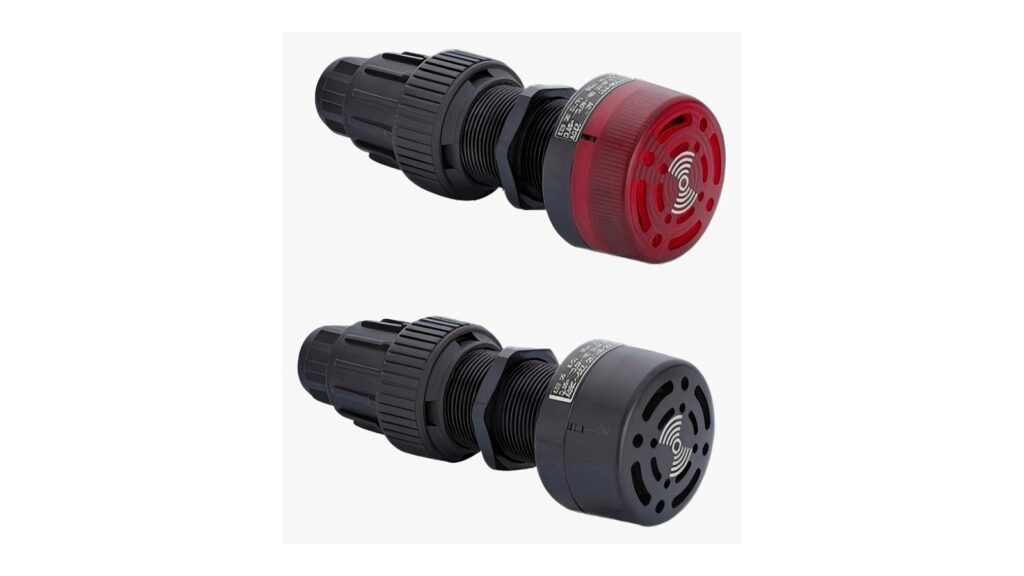
Information to include in an explosion-proof audible and visual alarm RFQ
Provide the Zone, EPL or ATEX category, gas or dust group, temperature and ambient limits, supply, control interface, alarm purpose, sound and light functions, location, background noise, viewing conditions, entries, environment, destination and document route.
ISO 7731:2003 covers physical design principles, ergonomic requirements and test methods for auditory danger signals in public and work areas. ISO 11428:1996 addresses perception, safety and ergonomic requirements for visual danger signals. These human-response requirements are separate from the explosion-protection assessment of the device.
1. What makes an audible and visual alarm suitable for a hazardous area?
The exact device must have marking and current evidence that match the approved area classification and operating conditions. Check the protection concept, EPL or category, gas or dust group, temperature marking, ambient range, certificate scope, conditions, entries and instructions.
A housing shape, product name or photograph is not proof. Match the legal manufacturer, model and suffix across the quotation, marking and official record. The Ex marking guide explains the complete identity.
2. Which Zone or EPL should I specify?
Specify the Zone and required EPL from the approved project classification. Do not ask a supplier to infer Zone 1, Zone 2, Zone 21 or Zone 22 from an industry name, process photograph or general description.
Zone and EPL are related inputs, but one does not replace the other. The model must also match the group, temperature, ambient and certificate conditions. Use the EPL guide when preparing the requirement sheet.
3. Does a gas marking also cover combustible dust?
No. A gas marking does not automatically establish dust suitability, and a dust marking does not establish gas suitability. Dual use requires complete marking and documentation for both hazards on the exact model and configuration.
For dust, state the approved Zone, EPL, Group III subdivision, maximum surface temperature and relevant environmental information. For gas, state the Zone, EPL, gas group and temperature class. Never infer dual coverage from an IP rating.
4. Is IP66 the same as explosion protection?
No. IP66 describes a degree of protection provided by an enclosure against solids and water. It does not demonstrate that a device controls ignition sources in an explosive atmosphere.
An alarm may need both ingress and Ex protection. Review the complete certificate and marking for hazardous-area suitability. The IP66 versus explosion proof guide explains the evidence difference.
5. How loud should the audible alarm be?
There is no single sound-pressure value suitable for every workplace. The warning must be selected and verified for the intended reception area, relevant background noise, frequency content, distance, barriers, hearing protection and the hearing abilities of exposed people.
The UK Health and Safety Executive notes that an alarm must attract attention over background noise, not merely be audible while someone listens for it. Use the applicable method and site validation rather than a catalogue maximum alone.
6. What sound data should a buyer request?
Request sound-pressure data with its stated test distance and conditions, available tones or temporal patterns, frequency information, volume adjustment method, duty cycle and any directional characteristics. Also state the site's background-noise range, mounting location and expected listener positions.
If hearing protection is worn, include it in the effectiveness assessment. A large nominal dB number without distance, test method and site context is not enough to approve an alarm.
7. When is a visual signal needed as well?
A visual signal can be needed where noise, hearing protection, hearing impairment, distance or process conditions may prevent reliable auditory perception. It can also reinforce meaning, but it should not be added without a defined alarm philosophy and site assessment.
Assess viewing distance, line of sight, ambient lighting, obstructions, flash characteristics and the people who must respond. Explosion protection does not establish visual effectiveness.
8. How should color and flash pattern be selected?
Select color and flash pattern from the site's alarm philosophy, risk assessment and applicable local or sector rules. The signal should be distinguishable from normal status indications and should communicate a defined action to trained personnel.
Do not assume one color has the same mandated meaning in every country or plant. IEC 62682:2022 treats alarms as part of a managed operator-response process, not as isolated hardware.
9. Which voltage, current and control inputs must be specified?
State the supply voltage, AC or DC, frequency where relevant, tolerances, current or power demand, starting or inrush behavior when documented, control method, supervision requirements and terminal arrangement. Define whether sound and light operate together or through separate inputs.
The control interface must match the system and certified configuration. Do not approve a substitute only because its nominal voltage is similar.
10. What must be checked for temperature and ambient limits?
Check the gas temperature class or dust maximum surface temperature and the marked minimum and maximum ambient range. These are different parameters, and both must match the approved project requirement.
Electrical load, duty cycle, sun exposure, mounting and local environmental conditions can affect suitability. The temperature class and ambient temperature guide explains why a T-class is not an ambient-temperature rating.
11. Which cable entries, glands and stopping plugs are acceptable?
Use only entry devices, thread forms, cable ranges, adapters and stopping methods permitted by the exact protection concept, certificate and instructions. Specify cable type, armour or braid, outside diameter, entry thread, material, entry position and environmental sealing needs.
Unused entries require an approved treatment. Field drilling or an unassessed adapter can affect enclosure integrity and certification. The cable gland selection FAQ provides a detailed input checklist.
12. Which documents should be approved before ordering?
Approve the exact certificate and schedule, current online status where available, marking, data sheet, dimensional drawing, wiring and terminal information, instructions, entry details, sound and visual performance data, declaration required for the destination, and any project-specific approval records.
If the alarm is part of a fire, gas-detection, evacuation or safety system, verify the separate system and performance approvals required by the jurisdiction and project. An Ex certificate alone does not certify the complete alarm function.
How Ex protection and alarm effectiveness fit together
IEC 60079-0:2026 provides general Ex equipment requirements. IEC 60079-14:2024 covers installation design, selection, installation and initial inspection. Neither replaces the human-factors and system work needed for an effective warning.
ISO 8201:2017 addresses the temporal pattern and sound pressure of an audible emergency evacuation signal, while excluding individual signalling components. A certified device is one system input, not proof that the complete site alarm is effective or approved.
Current MMAIATEX certification status
The public MMAIATEX About page states that ATEX, IECEx and CCC certification work is in progress. This FAQ, the related product category and the representative photograph do not establish completed certification or alarm-system approval for a particular MMAIATEX product, model or configuration.
Review the MMAIATEX warning-light category for product discovery only. Request the current exact-model documents and verify the marking, certificate holder, status, scope, issue, conditions, electrical data and performance evidence before specification.
Safety disclaimer
This FAQ is general purchasing information, not an area classification, acoustic or visual assessment, alarm design, evacuation plan, certificate interpretation, installation instruction or engineering approval.
Competent personnel must define and validate alarm purpose, priority, coverage, audibility, visibility, logic, testing and response under applicable requirements. Hazardous-area selection and installation require exact current product evidence.
Request an exact alarm information review
Send MMAIATEX the approved hazardous-area requirements, alarm purpose, supply and control details, sound and visual requirements, environmental conditions, entry plan, destination and document list. The team can identify potentially relevant product information for the responsible buyer or engineer to assess.
Primary sources
- IEC 60079-0:2026, general Ex equipment requirements
- IEC 60079-14:2024, installation design and equipment selection
- ISO 7731:2003, auditory danger signals
- ISO 11428:1996, visual danger signals
- ISO 8201:2017, audible emergency evacuation signal
- IEC 62682:2022, alarm management for process industries
- UK HSE L108, Controlling noise at work