
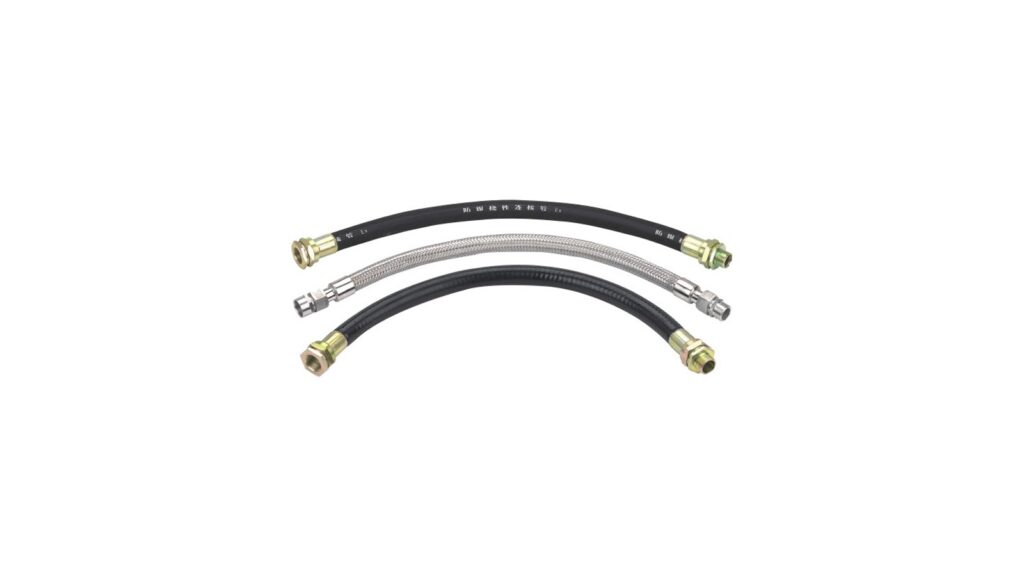
How to select explosion-proof flexible conduit
Begin with the approved hazardous-area classification and the reason flexibility is needed. A useful request should include:
- destination country and applicable certification or approval system;
- Zone or Division, gas or dust group and required EPL or category;
- connected equipment, entry thread and protection concept at each end;
- cable type, outside diameter, conductor count and current duty;
- required conduit length, routing, movement, vibration and minimum bend constraints;
- conduit material, jacket, corrosion, temperature, UV, oil and chemical exposure;
- ingress, washdown and drainage conditions;
- end fittings, seals, adapters, bonding and strain-relief requirements; and
- exact drawings, certificates, instructions and inspection records required at delivery.
The MMAIATEX cable gland selection FAQ and IEC 60079-14:2024 buyer checklist can help organize the connected-entry and installation evidence.
1. What is explosion-proof flexible conduit?
It is a flexible conduit or conduit assembly selected to route and protect cable where movement, vibration, alignment or installation access makes a rigid path unsuitable. In a hazardous area, the complete assembly must preserve the protection and environmental requirements of the connected equipment. The phrase explosion-proof flexible conduit is not a substitute for the exact product marking, certificate, fitting schedule or installation approval.
2. Does IEC 61386-23 compliance prove hazardous-area suitability?
No. The official IEC 61386-23:2021 page says that the standard specifies requirements for flexible conduit systems and is used with IEC 61386-1. That cable-management function does not by itself establish an Ex protection concept, hazardous-area certificate or suitability for a particular Zone, Division, gas or dust group. Verify cable-management and Ex requirements as separate evidence layers.
3. When is flexible conduit appropriate in a hazardous area?
Typical reasons include controlled movement, equipment vibration, thermal movement, minor alignment differences or a need to protect a cable near a movable connection. Flexibility must solve a defined mechanical problem without creating unsupported weight, excessive bending, abrasion, liquid traps or stress at the equipment entry. The responsible installation designer must decide whether a flexible section is permitted and where it should begin and end.
4. Which Zone, Division or EPL should I specify?
Use the current area-classification document approved by the facility authority. Match the exact assembly and connected equipment to the required Zone or Division, gas or dust group, EPL or category, temperature information and ambient range. Do not convert between Division and Zone systems by name alone. The Class I Division 1 versus Zone 1 guide explains why approval and marking structures are not interchangeable.
5. How do I choose conduit material and jacket construction?
Define corrosion, chemicals, oil, sunlight, abrasion, impact, washdown, temperature and fire-performance needs. Metallic, nonmetallic, coated and jacketed constructions behave differently. Ask for the exact material description and environmental limits rather than selecting by color or a generic stainless-steel claim. Confirm that the jacket and conduit remain compatible with the end fittings and any required bonding method.
6. How should length and bend requirements be specified?
Provide the installed route, end-to-end connection points, movement envelope and required service access. Use the manufacturer's minimum bend radius, movement limits and support instructions for the exact assembly. A longer section is not automatically safer. Excess length can sag, rub, trap liquid or transfer loads to an entry. Do not coil spare conduit or force a tight bend to solve a measurement error.
7. Are the end fittings part of the Ex review?
Yes. End fittings determine how the conduit connects, seals, resists pull and transfers mechanical loads. Specify the exact fitting at each end, its thread, material, orientation and relationship to the connected enclosure. Mechanical fit alone does not prove protection. Request controlled evidence that the conduit and fittings form an approved combination and that the fitting is permitted at the equipment entry.
8. Do I still need cable glands or sealing devices?
It depends on the protection concept, cable, entry system, certificate and installation design. A conduit fitting does not automatically perform every gland or sealing function. The installation may require cable retention, sealing, a barrier arrangement, a separate gland or a defined stopping location. Never assume that filling a fitting with an unapproved compound creates explosion protection.
9. Can I use thread adapters or reducers?
Only when the exact adapter or reducer is permitted by the connected equipment documentation and the installation design. Verify thread form, size, engagement, material, environmental protection, Ex evidence and the effect on orientation and bending loads. Stacked adapters create additional interfaces and should not be improvised. The Ex marking guide helps organize the equipment identity check before an entry is changed.
10. Is an IP rating enough for an explosion-proof flexible conduit assembly?
No. IEC 60529 classifies specified enclosure protection against access, solids and water. An IP rating does not prove flameproof performance or another Ex protection method. The conduit, fittings and connected entries must preserve the required environmental protection after installation, but that is a separate check from hazardous-area conformity. Read the IP66 versus explosion-proof guide before comparing the two claims.
11. How are bonding and earthing handled?
The responsible electrical designer must define the protective-conductor and equipotential-bonding path. Do not assume a metal conduit or fitting provides a reliable path unless the exact design, joints and instructions establish it. Coatings, flexible construction, corrosion and adapters can affect continuity. Request the approved bonding method, conductor information, connection points and verification records for the complete installation.
12. Which documents and inspection records should be approved?
Request the exact product data sheet, material and construction description, dimensions, bend and movement limits, end-fitting schedule, thread details, cable range, temperature and environmental limits, applicable Ex marking or certificate records, installation instructions and bonding requirements. At receipt and installation, record identity, length, damage, routing, supports, entries, seals, bonding and document revisions. Preserve records for later inspection and replacement.
Current MMAIATEX certification status
The public MMAIATEX About page states that ATEX, IECEx and CCC certification work is in progress. MMAIATEX Explosion-proof Technology (Zhejiang) Co., Ltd. does not present this FAQ, a product category, an IP rating or a representative photograph as evidence that a particular conduit, fitting or assembled configuration has completed certification.
Buyers should request current exact-model records and independently verify the certificate holder, issue, status, covered configuration, marking, standards, conditions and installation instructions through the applicable official source.
Safety and legal disclaimer
This FAQ is general educational information. Flexible conduit selection and installation can affect electrical safety, ingress protection, mechanical integrity, bonding and explosion protection. Work must be performed by competent parties under the applicable site, manufacturer, standard and regulatory requirements. Do not install or energize an assembly when its entries, fittings, seals, bonding path or Ex status are unresolved.
Request an exact flexible-conduit review
Send the destination market, approved area classification, connected equipment entries, cable details, route, movement, environmental conditions and required document list. MMAIATEX can identify available product information for assessment by the responsible buyer and installation designer.