
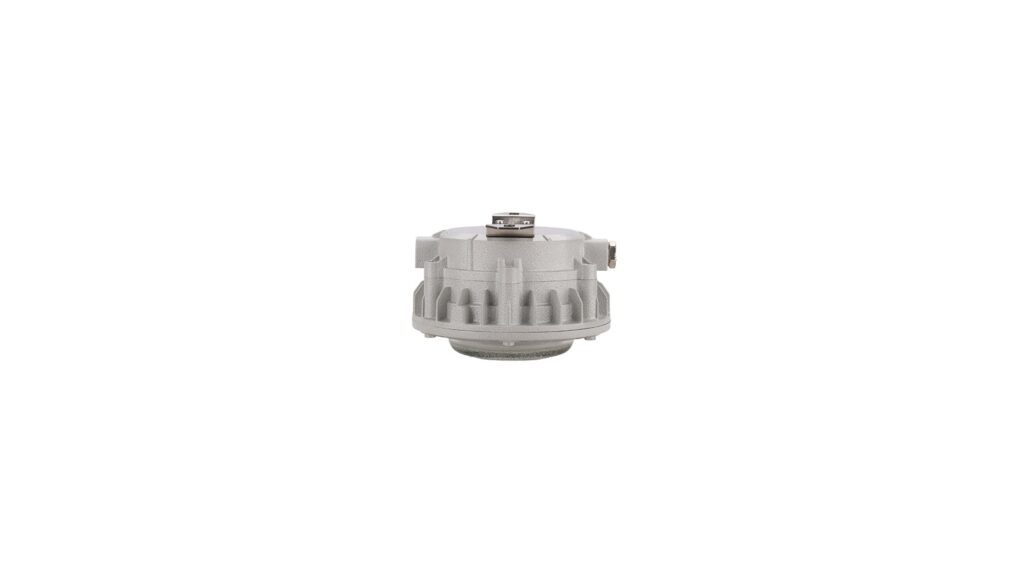
Image note: The representative website photograph shows a luminaire, not the motor starter discussed below. It is not evidence of a starter design or approval. Verify exact model marking, certificate scope and current documentation for any offered equipment.
1. What should a quotation for explosion-proof motor starters identify?
It should identify the offered assembly precisely enough to connect the price with its drawings and supporting documents. Ask for the model and configuration, intended location, applicable Ex marking, electrical ratings and included control functions. Record exclusions as well as inclusions. A quotation that names only an enclosure or contactor family leaves the buyer unable to tell which complete arrangement the evidence covers.
2. Does IEC 60947-4-1 establish explosion protection?
No. The official IEC 60947-4-1:2023 listing concerns electromechanical contactors and motor starters, including specified motor protective switching devices and accessories. Its electrical product scope is not a model-specific Ex certificate. Ask separately for the explosion-protection documents applicable to the offered assembly and destination market. A standards list on a brochure cannot resolve that distinction by itself.
3. Which edition details should buyers keep in the file?
As reviewed on October 14, 2026, IEC lists edition 5.0 of IEC 60947-4-1:2023, published November 8, 2023, with the March 2026 correction incorporated. The separate corrigendum record is dated March 16, 2026. Preserve the edition actually cited by the offered product's documents and ask about discrepancies. Do not assume a newly published document automatically invalidates an existing approval.
4. Is a certified motor enough to approve its starter?
No. A motor and its starter are different items with different functions and documentation. Keep the motor identification and its requirements available, but ask which evidence applies to the starter itself and to their intended combination. This FAQ does not select the motor, prescribe a starting method or certify a complete drive system. The purchaser needs a traceable answer for each relevant scope, not a general statement that the project contains certified parts.
5. Can an ordinary contactor simply be placed in an Ex enclosure?
Do not treat that change as automatic approval. Ask the responsible manufacturer which exact internal arrangement, ratings and operating conditions are covered by the complete equipment documentation. IEC 60079-0:2026, edition 8.0, addresses general construction, testing and marking of Ex equipment and components. Its public description is not permission to assemble or modify a starter without assessment. Refer to the separate Ex db and Ex eb guide for terminology, not an assembly recipe.
6. What motor-duty information should accompany the enquiry?
Provide the motor data and operating-duty description approved by the project engineer, together with supply and control-circuit requirements. Identify the intended starting arrangement and any unusual operating sequence that the reviewer has specified. Ask the supplier to state assumptions explicitly. Do not substitute a single power figure for a complete duty description, and do not select contactor ratings or overload settings from this general article.
7. Are a contactor, overload function and short-circuit protection interchangeable?
No. Ask the supplier to identify the devices and functions included in the offered arrangement and the evidence for their coordination. A generic statement such as protection included does not explain the boundary between the starter and upstream equipment. The related circuit-breaker buyer FAQ addresses a different purchasing item. Keep coordination decisions with a qualified electrical designer rather than inferring them from similar catalogue ratings.
8. Does installing the starter outside the hazardous area settle every question?
No. Confirm the intended installation location, the interface with the equipment it controls and the safety functions assigned by the project. Location and function are different parts of the enquiry. Ask the responsible reviewer which explosion-safety and other product requirements apply to that arrangement. This answer is not a claim that every remote starter falls under ATEX, nor that an outside location automatically removes every relevant obligation.
9. Can a local push-button station stand in for the starter assembly?
Not without identifying what is actually supplied. A control station may provide operator inputs while switching and protective functions are elsewhere. Ask the quotation to distinguish local controls, the starter assembly and any external control equipment. Use the control-station buyer FAQ for the operator-interface questions. Do not allow two differently scoped offers to appear equivalent just because both include start and stop buttons.
10. What should be recorded when a supplier proposes a replacement component?
Record the proposed change against the exact assembly revision and obtain the responsible manufacturer's documented assessment before acceptance. Ask whether drawings, instructions and approval documentation remain applicable, and which authorised process governs the change. Do not assume matching external dimensions or nominal ratings preserve the approved configuration. This is a document-control question, not permission to substitute a component or open energised equipment.
11. What should arrive with the completed order?
Agree a project-specific document list before ordering. A useful starting point is the final assembly identification, relevant drawings, operating and installation instructions, applicable declaration or certificate documents, and a record of accepted deviations. Link each item to the supplied configuration and revision. The certificate-verification guide explains evidence checks, but purchasing review alone is not an installation inspection or authorisation to energise the equipment.
12. Who should resolve a conflict between the quotation and the technical documents?
Return the conflict to the responsible manufacturer and project engineering reviewer before acceptance or use. Name the documents, revisions and conflicting statements so the question can be answered directly. HSE's guidance on electricity in potentially explosive atmospheres stresses suitable equipment, regular inspection and maintenance by competent people. This purchasing checklist supports professional review; it does not replace it or provide settings, wiring instructions or commissioning procedures.
Source note
The edition and scope statements above were checked against the linked official IEC listings on October 14, 2026. They summarise public catalogue information, not a review of the complete paid standards. The questions are an editorial aid for organising an enquiry, not a universal conformity-assessment route or a mandatory document list for every jurisdiction.
MMAIATEX certification status
The MMAIATEX About page describes ATEX, IECEx and CCC certification as in progress. This is the website's statement, not independent certificate-register verification. For MMAIATEX Explosion-proof Technology (Zhejiang) Co., Ltd., obtain the current documentation for the exact offered equipment. No starter model, certification or performance capability is claimed by this FAQ or its photograph.
Safety and legal disclaimer
Motor-control equipment and hazardous-area installations require competent, project-specific assessment. This article is general procurement information, not electrical design, installation, repair, commissioning or legal advice. Do not use it to choose protection settings, bypass interlocks or modify an approved assembly.
Contact MMAIATEX
Send the approved project requirements, intended assembly boundary and outstanding document questions so the proposed supply can be discussed on a clear basis.