
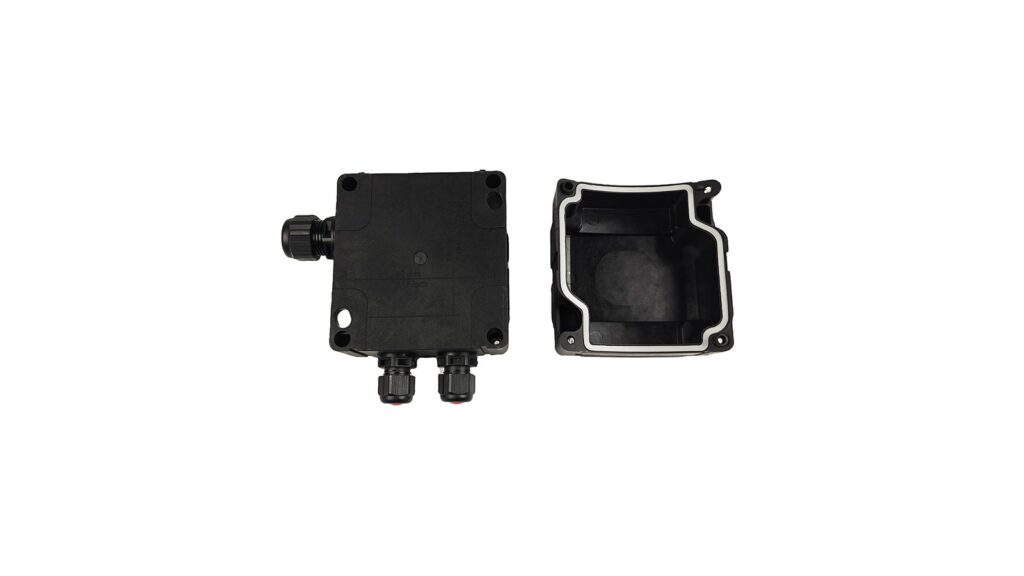
Image note: The representative photograph shows a junction box and entry interfaces, not a four-accessory kit. It does not establish included items, compatibility, sealing or earthing performance, or an Ex rating. Verify exact model marking, certificate scope and current documentation.
Cable gland accessories: keep four functions separate
These are editorial buyer questions, not a record of customer enquiries. The comparison identifies functions; it does not prescribe an installation arrangement.
| Item | Function to identify | Purchasing evidence |
|---|---|---|
| Locknut | Mechanical securing | Exact reference and documented interface |
| Entry-thread sealing washer | Sealing at the equipment entry | Specified seal and applicable configuration |
| Earth tag | A connection point for bonding | Identified part and supporting electrical evidence |
| Shroud | External covering against accumulation | Named covering and intended gland combination |
1. Does every gland need all four accessories?
No. A list of accessory types is not a universal bill of materials. CMP's accessory-selection guidance distinguishes fixing, earth-continuity and covering accessories within an equipment-dependent arrangement. Ask the supplier to identify which items belong to the exact proposal and which do not. A clear response can say that an item is not applicable; an unexplained blank cannot tell the buyer whether it was deliberately omitted or simply forgotten.
2. What should a locknut description tell the buyer?
It should identify the actual securing part, not just say that hardware is included. CMP describes its locknuts as securing glands or accessories to a gland plate or equipment. For purchasing review, record the offered part reference and the equipment interface it belongs to. Do not infer material, thread compatibility or electrical performance from its appearance. The supplied drawing and instructions govern the arrangement; this FAQ gives no tightening or assembly procedure.
3. Is an entry-thread sealing washer the same as the cable seal?
No. The name identifies a seal at the equipment-to-gland entry, not the gland's sealing interface around the cable. CMP's washer guidance makes the need dependent on the equipment and entry context. Ask which interface the quoted seal serves and how it is identified in the applicable documentation. A ring visible in a photograph does not establish its function, material or performance. Do not add a washer simply because another assembly has one.
4. Does an earth tag prove that the assembly is correctly earthed?
No. A part and a verified connection are different evidence. CMP's earth-tag page describes the tag's earth-bond connection function and the manufacturer's supporting evidence for its own products. That evidence does not transfer to a different tag or assembly. Record the proposed tag identity and leave connection design and verification to the responsible reviewer. The separate bonding versus earthing guide explains the wider distinction without treating a visible metal accessory as proof of continuity.
5. Can a shroud replace an entry seal or an earth tag?
Do not treat it as a substitute. CMP describes its shrouds as reducing the accumulation of dirt or foreign substances around the gland. That covering function is different from the other functions in the table. Ask for the exact covering reference and intended combination if one is proposed. Do not transfer another manufacturer's material, fire-performance or temperature claims to an unnamed sleeve, or assume a covered interface has an approved ingress-protection rating.
6. Are accessories automatically included with a gland?
Not necessarily. CMP's published guidance says its accessories are normally separate unless supplied in a pack or kit; that is its supply policy, not a statement about MMAIATEX. For any quotation, ask for an itemised included-items list with quantities and exclusions. Keep optional items visibly separate from included items so a price comparison does not quietly compare different contents. A picture showing several parts is not a packing list.
7. What makes an accessory line item unambiguous?
A useful line identifies the part name, manufacturer or supplier reference, quantity and the particular entry to which it belongs. Add the relevant drawing or document revision when available. If the quotation uses a shorthand description such as accessory set, ask for its definition before copying it into an order. This is an editorial purchasing format, not a mandatory standard form. Its value is that both parties can point to the same item rather than interpret a generic description differently.
8. Can a similar accessory from another source be substituted?
Similarity is not sufficient evidence. Treat a proposed substitution as a new item requiring documented review, not as an administrative name change. Ask what differs and which equipment documents support the revised combination. Do not approve it because a thread appears to fit or the material looks the same. The entry-thread compatibility guide owns the separate question of matching interfaces; an accessory schedule should preserve its result, not replace it.
9. Does a complete accessory kit settle gland selection?
No. A complete delivery and a suitable gland are separate questions. Cable, enclosure and protection requirements still need their own review, covered in the cable-gland selection FAQs. For this accessory enquiry, reference the gland already being evaluated and identify unresolved kit questions. Avoid restarting the whole selection exercise inside every accessory line; it can obscure a simple missing-item or inconsistent-reference problem.
10. What can a catalogue photograph establish?
It can help identify the visible product family, but cannot establish the delivered kit or an approved arrangement. Browse the listed cable glands and entry products to identify the relevant enquiry reference. The current category includes glands, conduit and plugs; it does not establish availability of every accessory discussed here. Send the catalogue reference together with the written item list instead of asking a reviewer to infer hidden components from a photograph.
11. How can the order and delivery records stay aligned?
Retain the agreed item schedule and its revision alongside the order. At receipt, compare the documented identities and quantities with the delivery records, and record unresolved differences before treating the paperwork as complete. This is a documentation comparison, not an inspection or installation procedure. Do not solve a missing or substituted item by improvising a combination. Refer the discrepancy to the responsible supplier and technical reviewer with the relevant line item identified.
12. What information makes the enquiry useful?
Provide the gland reference, equipment-entry drawing if available, proposed accessory list, quantities and any document that already defines the combination. Mark each item as included, optional, excluded or awaiting confirmation according to the supplier's response. Keep unanswered questions explicit. This makes the next exchange about a specific item or interface instead of asking for a vaguely complete kit, and does not presume that the supplier offers every listed accessory.
Certification status
As reviewed on October 20, 2026, the MMAIATEX About page describes ATEX, IECEx and CCC certification as in progress. This is an attributed company statement, not independent certificate verification. MMAIATEX Explosion-proof Technology (Zhejiang) Co., Ltd. is the legal entity identified here. No accessory, image or catalogue name in this article establishes approval of a complete configuration or a product's current availability.
Safety and legal disclaimer
This FAQ is for purchasing clarification, not accessory selection approval, installation, earthing design or field modification. Qualified personnel must review exact model documentation and applicable requirements. Manufacturer-specific examples explain functions only; they do not authorise transferring components, ratings or instructions to another product.
Contact MMAIATEX
For a cable-entry enquiry, send the catalogue reference and itemised accessory questions, including which quantities and configuration documents need confirmation.