
Explosion-proof distribution box selection needs one controlled configuration
A distribution box combines an enclosure, switching or protective devices, terminals, conductors, cable entries and installation interfaces. The safe evidence unit is the exact assembled configuration. Buyers should compare the offered model and circuit schedule with the marking, certificate schedule, drawings and instructions that actually cover it.
| Evidence group | Buyer question | Record to request |
|---|---|---|
| Location | What atmosphere and protection level must the assembly address? | Area classification, gas or dust group, zone, EPL or category, ambient and process conditions |
| Assembly | What devices, ratings and heat sources are inside? | Controlled bill of materials, single-line diagram, circuit schedule and terminal plan |
| Interface | How do cables enter and how is the box mounted? | Entry schedule, thread details, cable data, gland or stopping-plug evidence and mounting instructions |
| Conformity | Which exact configuration is covered? | Complete marking, current certificate and schedule, drawings, conditions and declaration required for the destination |
The current IEC 60079 series page lists separate standards for general requirements, flameproof enclosures, increased safety, installation and dust protection. Their scopes are related but not interchangeable. A buyer must identify which standards and editions are stated for the exact product.
Why a real product photograph is still not approval evidence
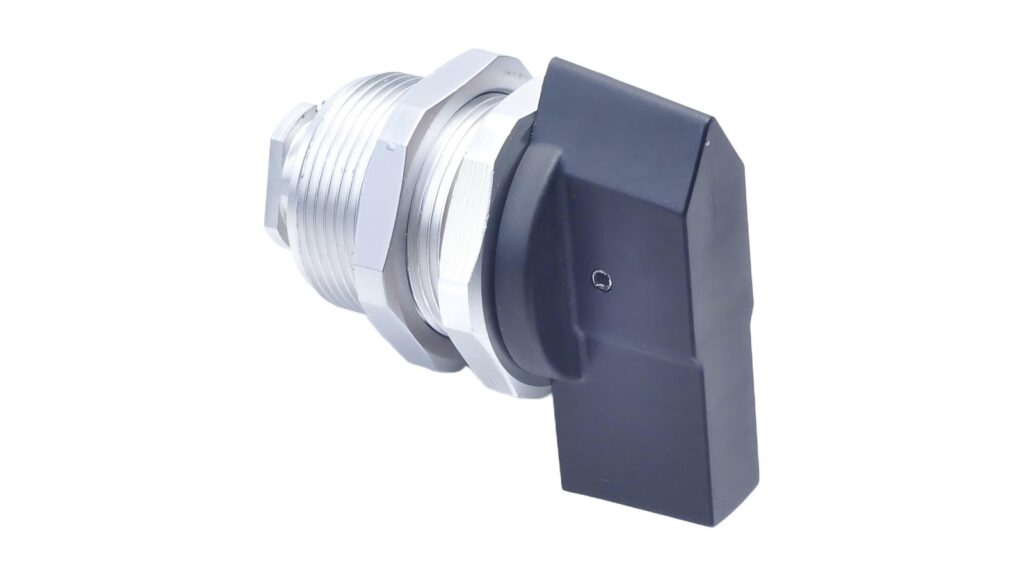
The featured image shows representative industrial control hardware from the MMAIATEX media library, not a distribution box. It provides procurement context but cannot reveal a box marking, covered variants, internal circuit schedule, thermal assessment, entry limitations or certificate status. The alt text and caption describe only what is visible and direct the reader back to controlled documents.
1. What information should a buyer send before requesting a distribution box?
Send the area classification, required protection level, gas or dust group, temperature limits, ambient range, supply, frequency, prospective fault current, incoming and outgoing circuits, load data, protective-device duties, control functions, cable list, entry direction, material and environmental conditions. State the destination market and required conformity route. A complete enquiry prevents a generic enclosure from being mistaken for a reviewed assembly.
2. Is a distribution box the same as a junction box?
Not necessarily. A junction box commonly provides connections or branching, while a distribution box may also contain switching, isolation or circuit-protection devices. Product names vary, so use the controlled circuit schedule and internal arrangement rather than the label alone. The earlier Zone 1 junction box checklist is useful for enclosure questions, but it does not define every distribution-box function.
3. Which complete Ex marking must match the location?
Match the legal manufacturer, exact model and suffix, protection concept, equipment group, EPL or category, gas or dust group, temperature class or maximum surface temperature, ambient range and certificate suffix. Read the elements together. The guide to reading Ex markings helps organise this check, but the certificate schedule and instructions control the exact scope.
4. Can one box be assumed suitable for both gas and dust atmospheres?
No. Gas and dust protection evidence uses different marking elements and may rely on different construction and assessment requirements. IEC 60079-1:2014 addresses flameproof enclosure protection for explosive gas atmospheres. IEC 60079-31:2022 addresses enclosure and surface-temperature protection for explosive dust atmospheres. Verify each claimed atmosphere on the exact assembly documents.
5. Does an IP rating prove explosion protection?
No. An IP code describes ingress protection within its stated test basis. It does not establish an Ex protection concept, EPL, equipment group, temperature limit or certificate. The guide on IP66 versus explosion-proof equipment explains the boundary. A project may require both ingress and explosion-protection evidence, but one does not replace the other.
6. Why is the final circuit schedule important?
Internal devices and conductors affect current, fault duties, spacing, heat dissipation, terminals and operating conditions. Request a controlled single-line diagram and schedule listing each incoming and outgoing circuit, protective device, pole count, rating and terminal assignment. Do not assume that a certificate family covers any combination that physically fits inside the enclosure.
7. Which circuit-breaker details need verification?
Verify the exact device identity, rated voltage and current, poles, tripping characteristics where relevant, short-circuit duties, coordination, operating mechanism and conditions inside the assessed assembly. The explosion-proof circuit breaker FAQ explains why a breaker name or handle cannot prove the completed distribution-box rating. Site calculations and applicable electrical rules remain necessary.
8. What should the cable-entry schedule contain?
The schedule should identify every entry position, thread or opening, cable type and diameter, gland or conduit interface, stopping plug, sealing requirement and permitted orientation. Match each entry device to the enclosure, cable and certificate conditions. The Ex cable-entry thread compatibility guide and cable gland FAQ address these interfaces without extending any certificate scope.
9. Can unused holes be drilled, tapped or plugged on site?
Only when the exact controlled documents and responsible approval route permit the work. Unauthorised drilling, tapping, machining or substitution can affect flamepaths, wall thickness, clearances, sealing, temperature and certificate scope. Read the enclosure modification FAQ before assuming that a workshop change is acceptable.
10. Which environmental conditions belong in the review?
Record ambient temperature, moisture, dust, corrosion, ultraviolet exposure, vibration, impact, mounting position, altitude where relevant and cleaning agents. Compare them with the exact material, coating, seals, entries and instructions. Do not infer chemical resistance, impact performance or outdoor life from colour, enclosure material or IP code alone.
11. Which documents should be checked before purchase?
Request the complete marking, current certificate and schedule where applicable, controlled drawings, bill of materials, circuit and entry schedules, instructions, declaration required for the market and any special conditions. Verify identity and status in the relevant official system. The IECEx and ATEX document verification guide explains why a certificate number without its current scope is incomplete evidence.
12. Who approves final selection, installation and energisation?
The responsible designer, hazardous-area engineer, installer, inspector and site operator must perform their duties under applicable law, standards and project controls. IEC 60079-14:2024 covers electrical installation design, equipment selection, installation and initial inspection within its scope. A supplier article cannot classify the area, complete fault calculations, approve modifications or authorise energisation.
Current MMAIATEX certification status
The public MMAIATEX About page states that ATEX, IECEx and CCC certification work is in progress. MMAIATEX Explosion-proof Technology (Zhejiang) Co., Ltd. does not present this FAQ, a photograph, an IP rating, a product category or a standard reference as proof that an identified distribution box has completed certification. Verify the exact manufacturer, model, marking, certificate status and scope, schedules, instructions, destination requirements and site conditions before selection.
Safety and legal disclaimer
This FAQ provides general technical and procurement education. It is not certification, conformity assessment, area classification, electrical design, fault calculation, thermal assessment, installation authorisation, inspection acceptance or legal advice. Licensed standards, applicable law, controlled product documents and actual site conditions govern. Qualified professionals must approve the final configuration and work.
Official sources
- IEC 60079-0:2026, general requirements
- IEC 60079-1:2014, flameproof enclosure protection
- IEC 60079-7:2015 with Amendment 1:2017, increased safety
- IEC 60079-31:2022, dust ignition protection by enclosure
- IEC 60079-14:2024, installation design and initial inspection
- IECEx standards list
- IECEx online certificate system
Contact MMAIATEX about a distribution box enquiry
Send the area classification, complete circuit and cable schedules, load and fault data, environmental conditions, destination market and document requirements. MMAIATEX can organise available product information for review by the responsible project parties.